


Before you specify
Frequently Asked Questions
What do the two motors actually do?
They drive the hydraulic pumps in parallel. A press of this size needs more oil flow than one motor of sensible size can deliver, so HSM splits it. The '73.8 + 73.8 HP' in the model name is two 55 kW motors, giving 110 kW installed. It is not two independent presses, and you cannot run the machine on one motor if the other fails.
How much more does it produce than the entry drive?
HSM's published figures are 692 m³/h idle and 34.6 t/h at 50 kg/m³ for this machine, against 506 m³/h and 25.3 t/h for the 45+45 kW version — roughly 37% more, for 22% more installed power. Idle cycle time drops from 15.5 to 11.3 seconds. Bale size, bale weight, wire count and press force are identical, so this is purely a rate decision.
What does a full bale weigh?
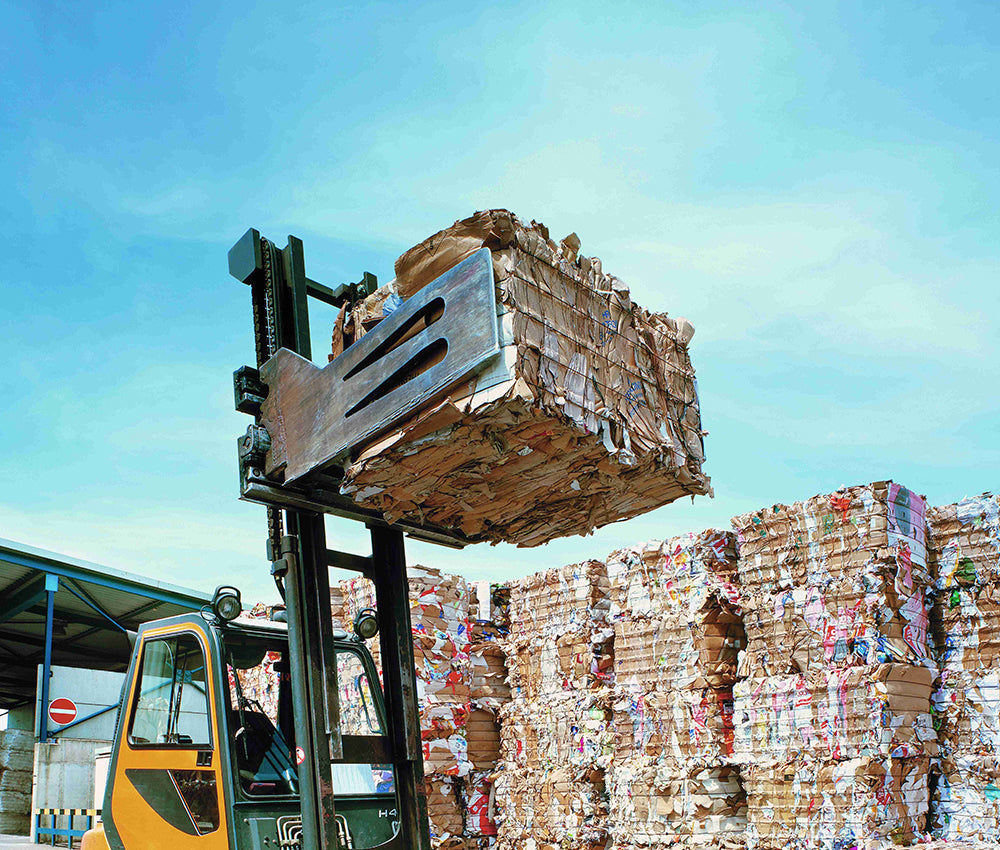
Between 700 and 1,100 kg (1,543–2,425 lb), at 1,100 x 1,100 mm in cross-section and whatever length you set between 600 and 2,000 mm. Five wires hold it. Handling bales at the top of that range needs a properly rated forklift or a bale clamp, and a bale storage area with a floor that can take the point loads of a stack.
Can it take residual waste?
HSM lists cardboard, mixed paper, plastic film, punch waste and residue, big bags, and HDPE/LDPE hollow containers and plastic bottles for the VK 12018. For genuinely abrasive residual waste HSM offers a wear-resistant steel option in the chamber, which tells you that standard-specification machines are not intended for it. Specify the wear package at order if residual waste is part of your stream.
How much building does it need?
The press is 12,413 mm long, 4,159 mm wide and 3,622 mm high, and weighs 38,000 kg. Add feed height above the aperture, a bale run-off and turning area at the discharge end, and maintenance access along at least one side. In practice a VK 12018 defines the layout of the hall it goes in rather than fitting into it, and the foundation needs engineering sign-off.
Which drive do most buyers choose?
We will not pretend to have sales statistics we do not have. What we can say is that the three drives differ only in cycle time, throughput and installed power, and that the sensible way to choose is to calculate the tonnes per hour your sorting line delivers at its sustained rate, then pick the drive whose published t/h figure at your material's bulk density exceeds it with margin. HSM publishes those figures for all three.