


Before you specify
Frequently Asked Questions
What does the second stage on the HDS 230 H-5 do?
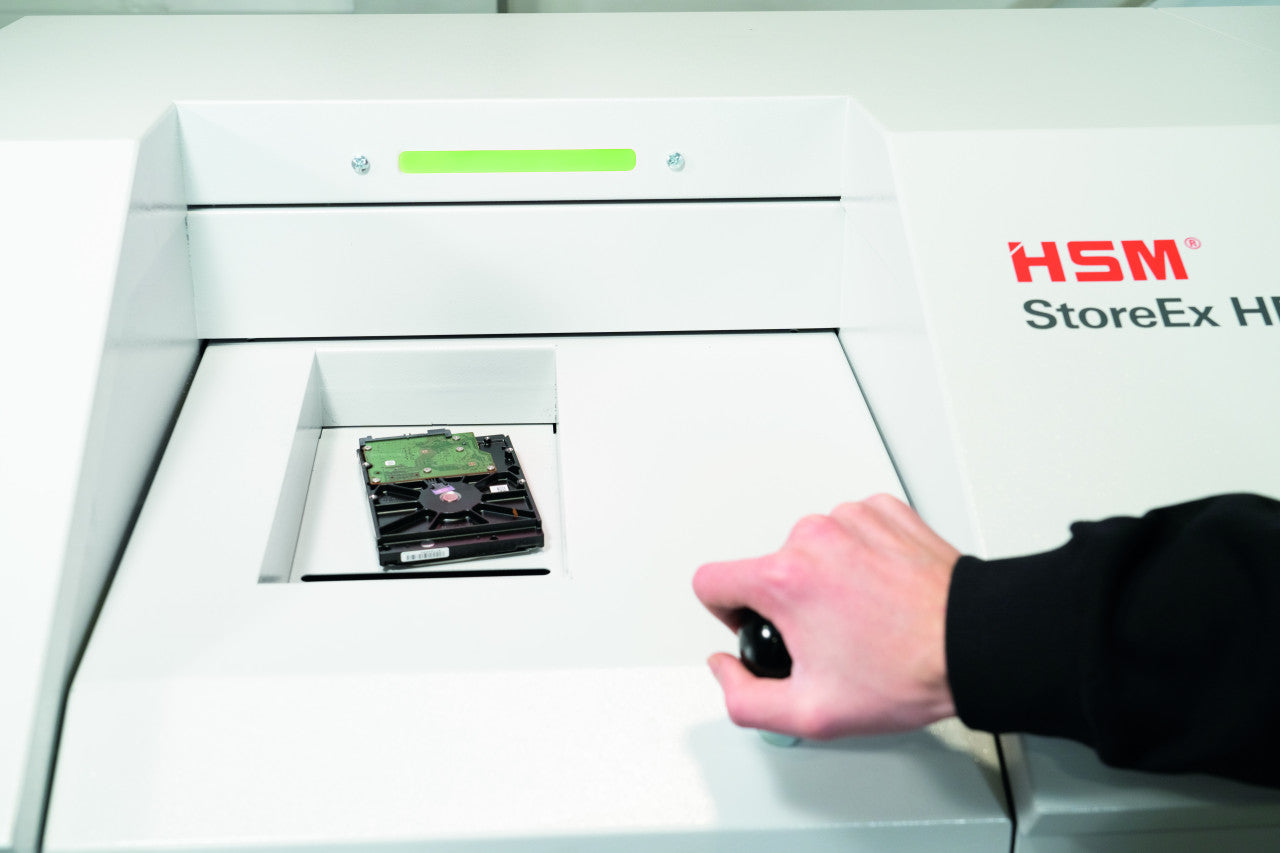
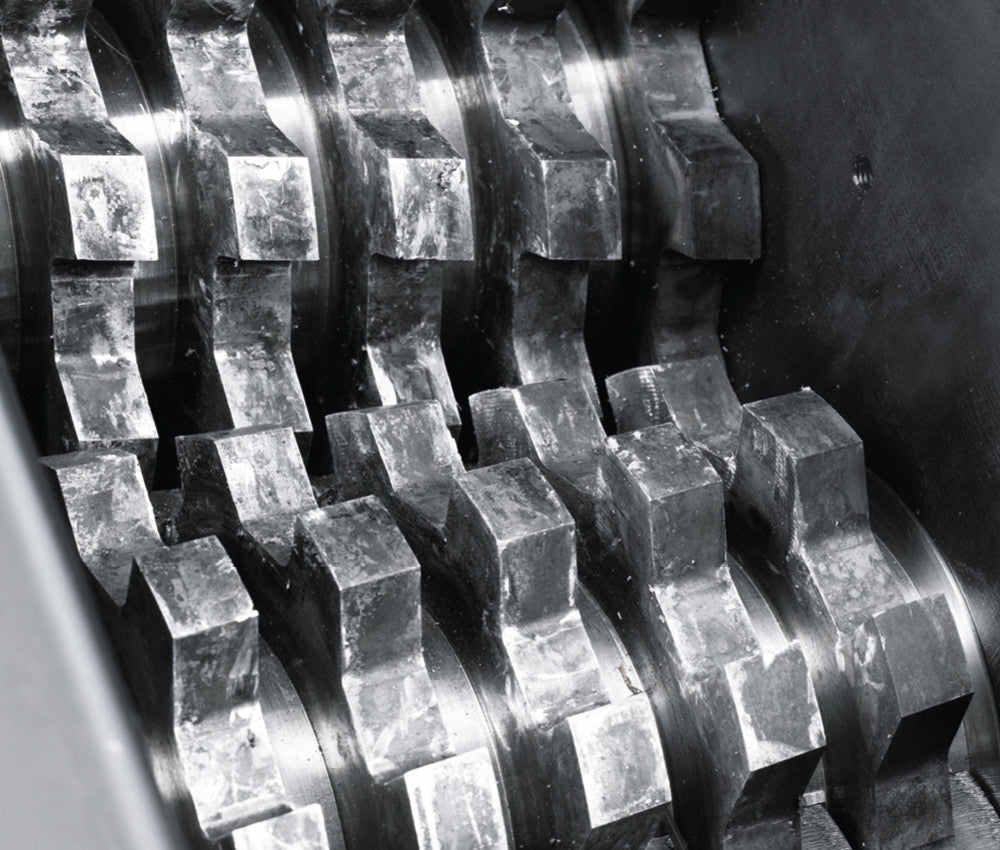
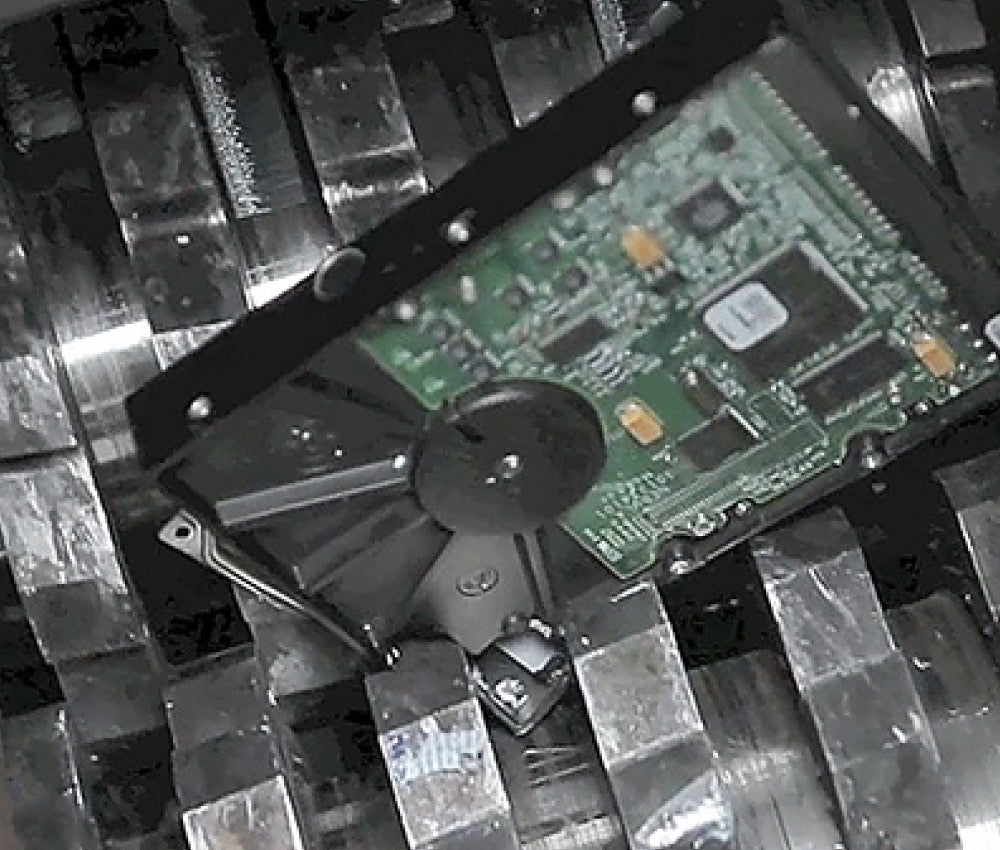
It cuts the already-shredded material again, reducing particles from 20 x 40-50 mm to 0.39 x 1-1.18 in and moving the rating from H-4 to H-5. Smaller fragments make it much less likely that SSD memory chips survive. The trade-off is 280 drives per hour instead of 360.
Does the HDS 230 H-5 tray model take more room than the H-4 tray model?
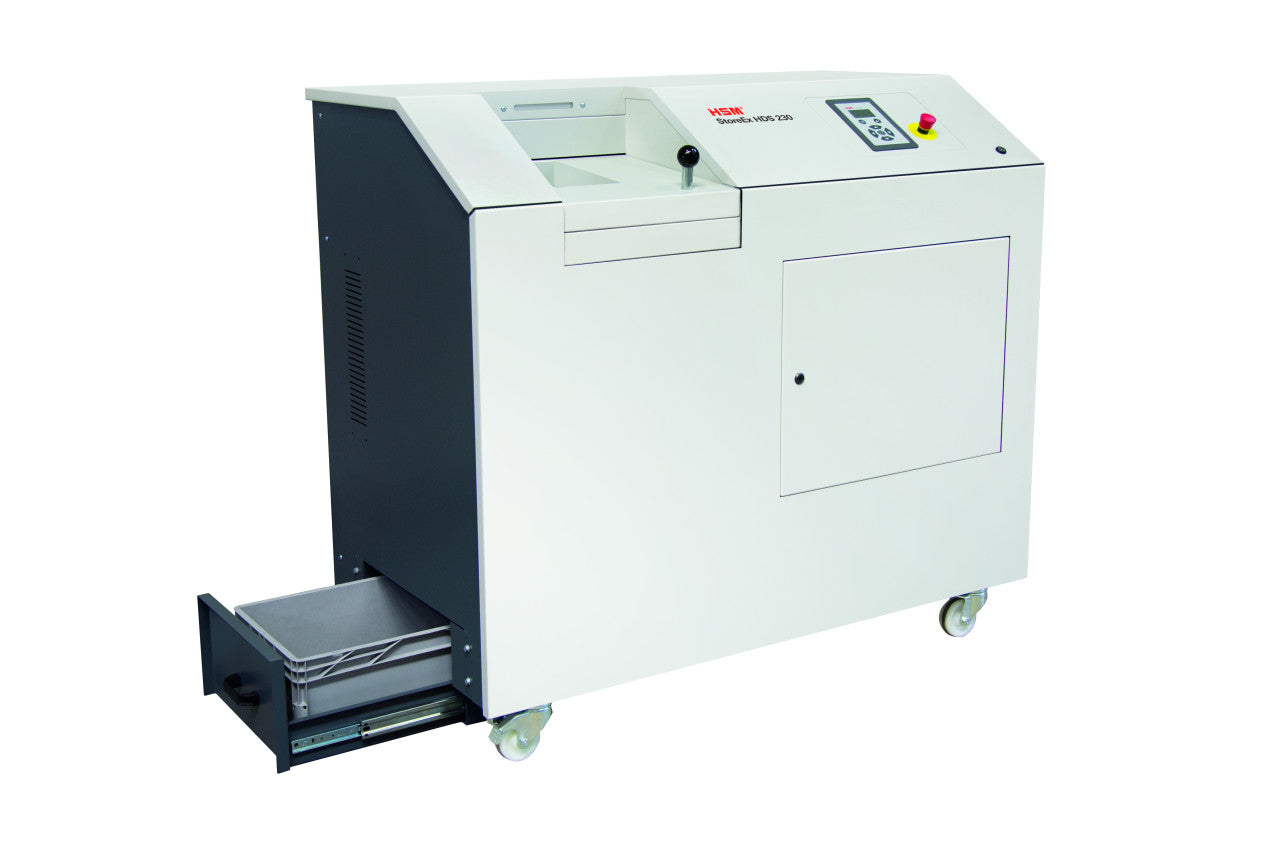
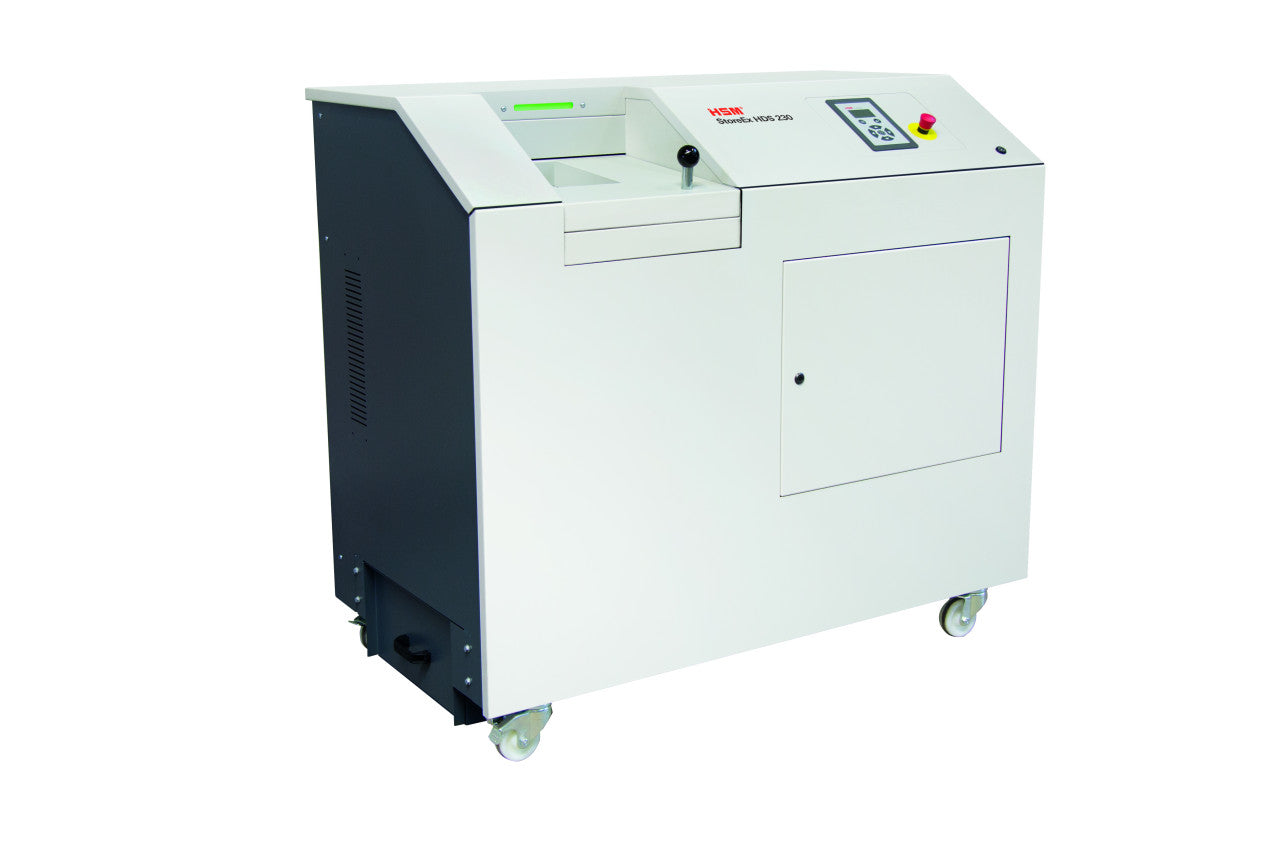
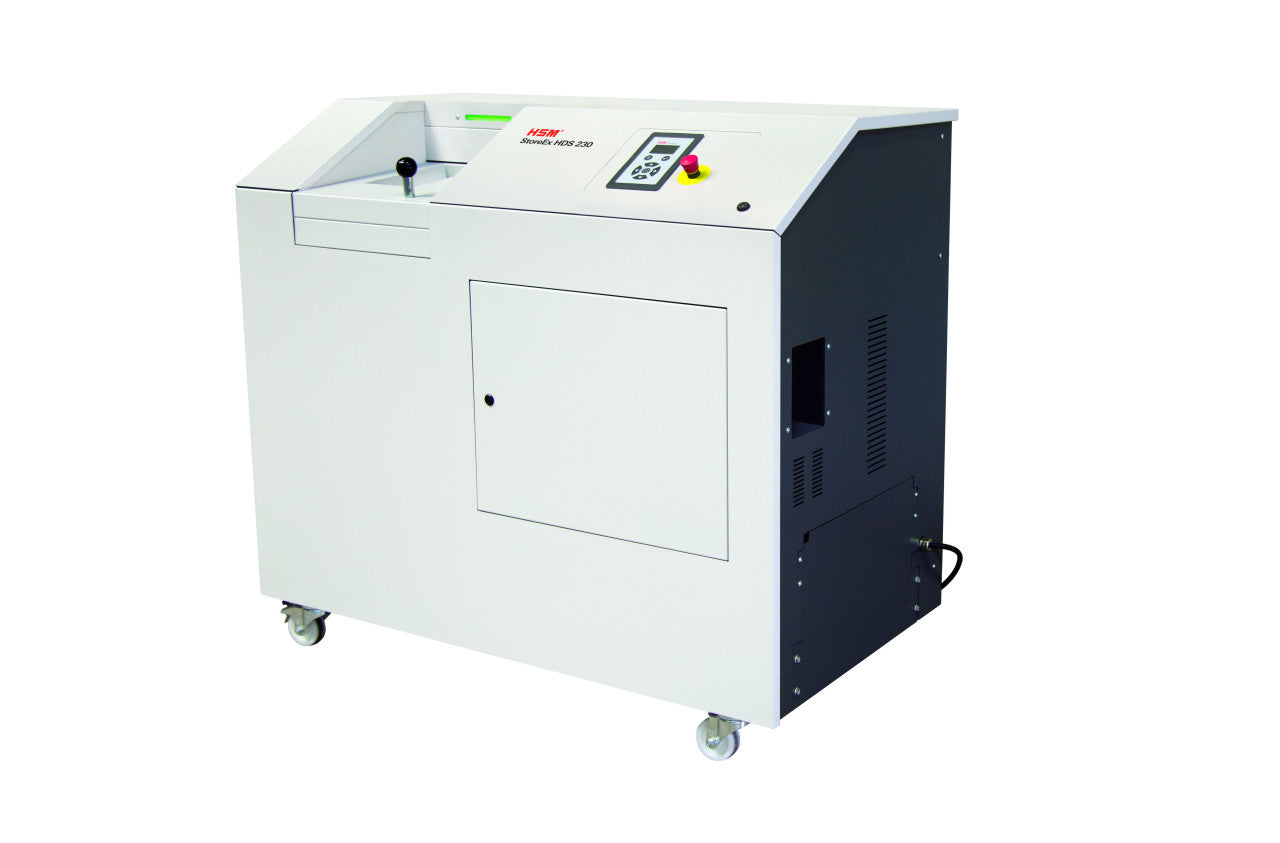
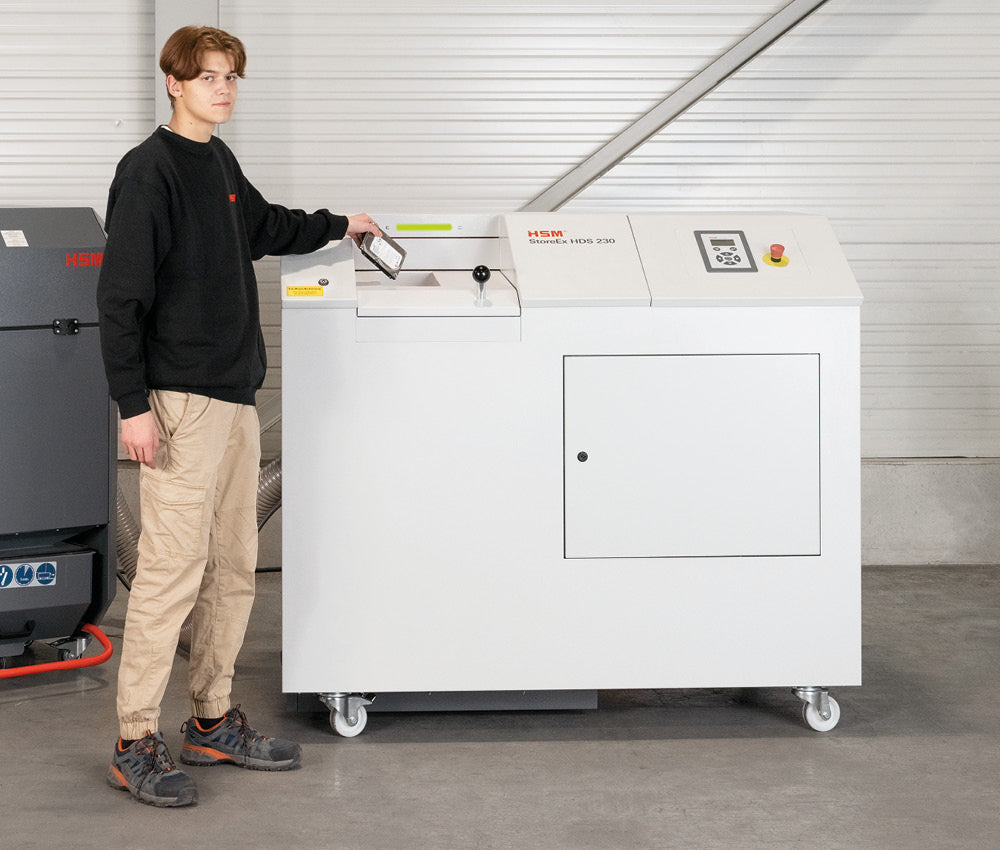
No. Both measure 62.2 x 35.63 x 55.91 in (1580 x 905 x 1420 mm). The difference is weight, 2,420.67 lb against 1,615.99 lb, so the H-5 raises a floor-loading question rather than a space question. Check with facilities if it will not sit on a ground-floor slab.
Is the StoreEx HDS 230 H-5 good enough for SSDs?
It is the stronger HDS 230 choice for SSDs, but H-5 does not guarantee every memory chip is destroyed. Many organizations combine H-5 shredding with verified cryptographic erasure and document both steps. If a regulator or customer sets a specific particle size, compare it with the published cut first.
How often does the HDS 230 H-5 tray need emptying?
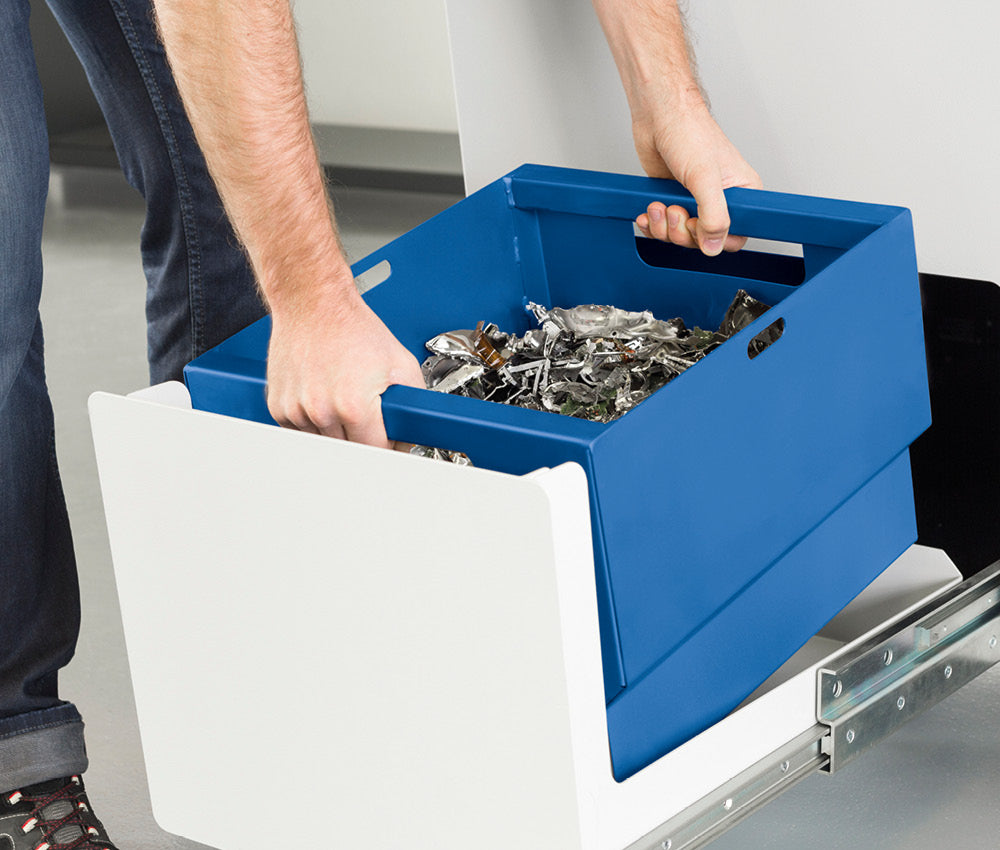
Plan on several times per busy session. Capacity is 11.9 gallons (45 L), and drive fragments cut twice pack tightly and get heavy. Sites that cannot pause to empty should look at the H-5 conveyor model, which drops output into a larger container they provide.
Why are there two cut sizes quoted for the HDS 230 H-5?
Different markets, different data sheets. The 208 V US machine is listed at 0.39 x 1-1.18 in; the 400 V European version, article 1777124, is listed at 11.5 x 26 mm. Either figure qualifies as H-5. Ask HSM to confirm the size for your serial number if a contract names one.
Can the HSM HDS 230 H-5 be used for classified hard drives?
Not for classified US government media. HSM does not appear on the current NSA/CSS Evaluated Products List for hard disk drive sanitization devices or on the earlier destruction list. H-5 is a strong commercial rating, but classified drives need EPL-listed equipment.