


Before you specify
Frequently Asked Questions
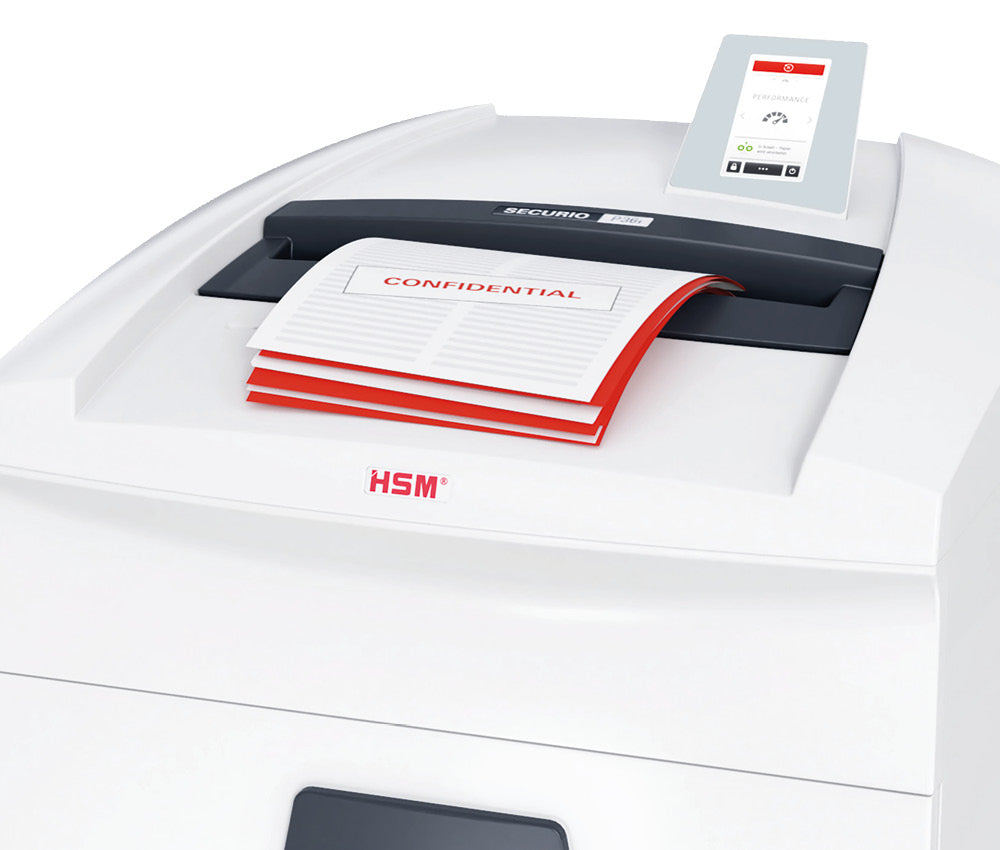
How does this differ from the 3.9 mm P36i?
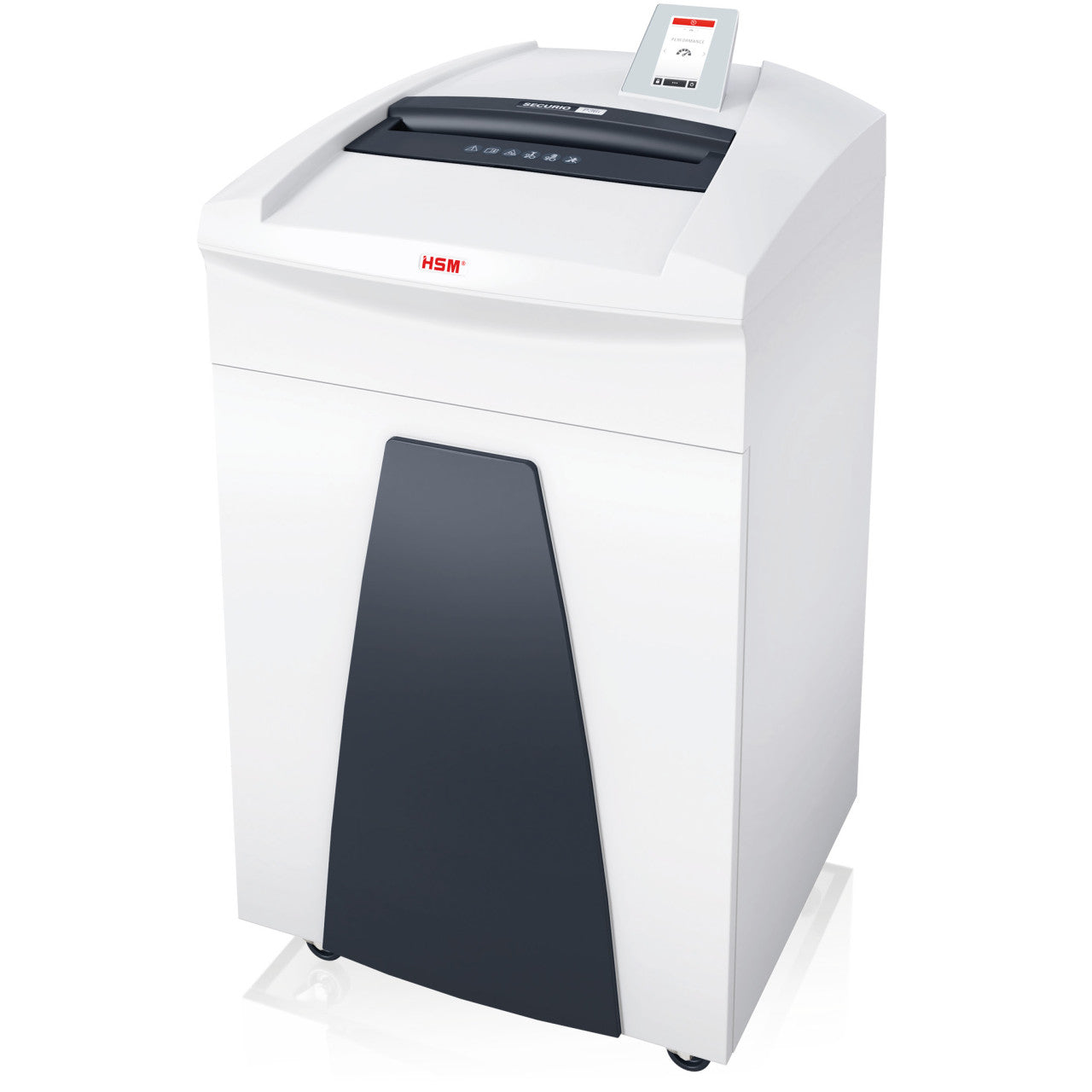
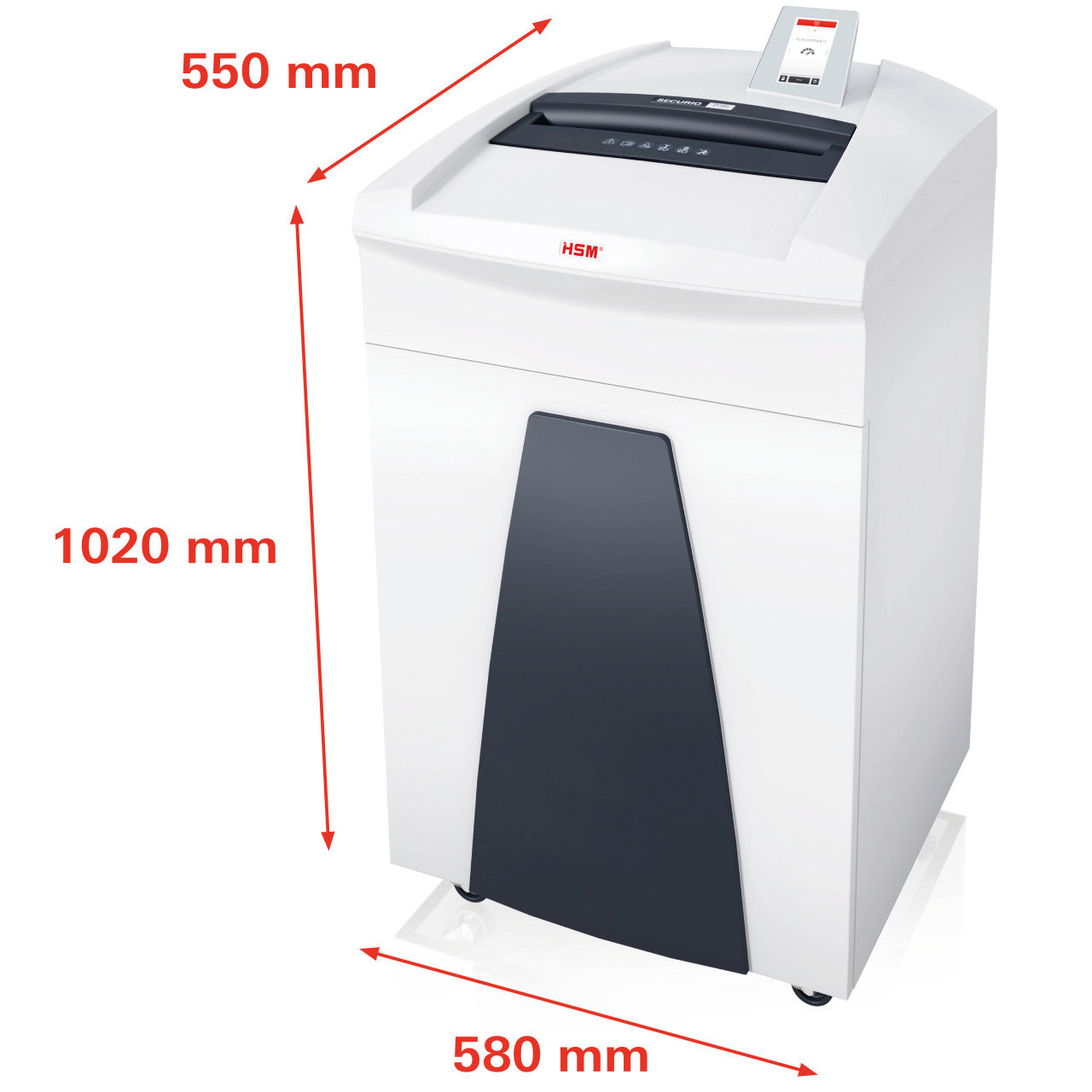
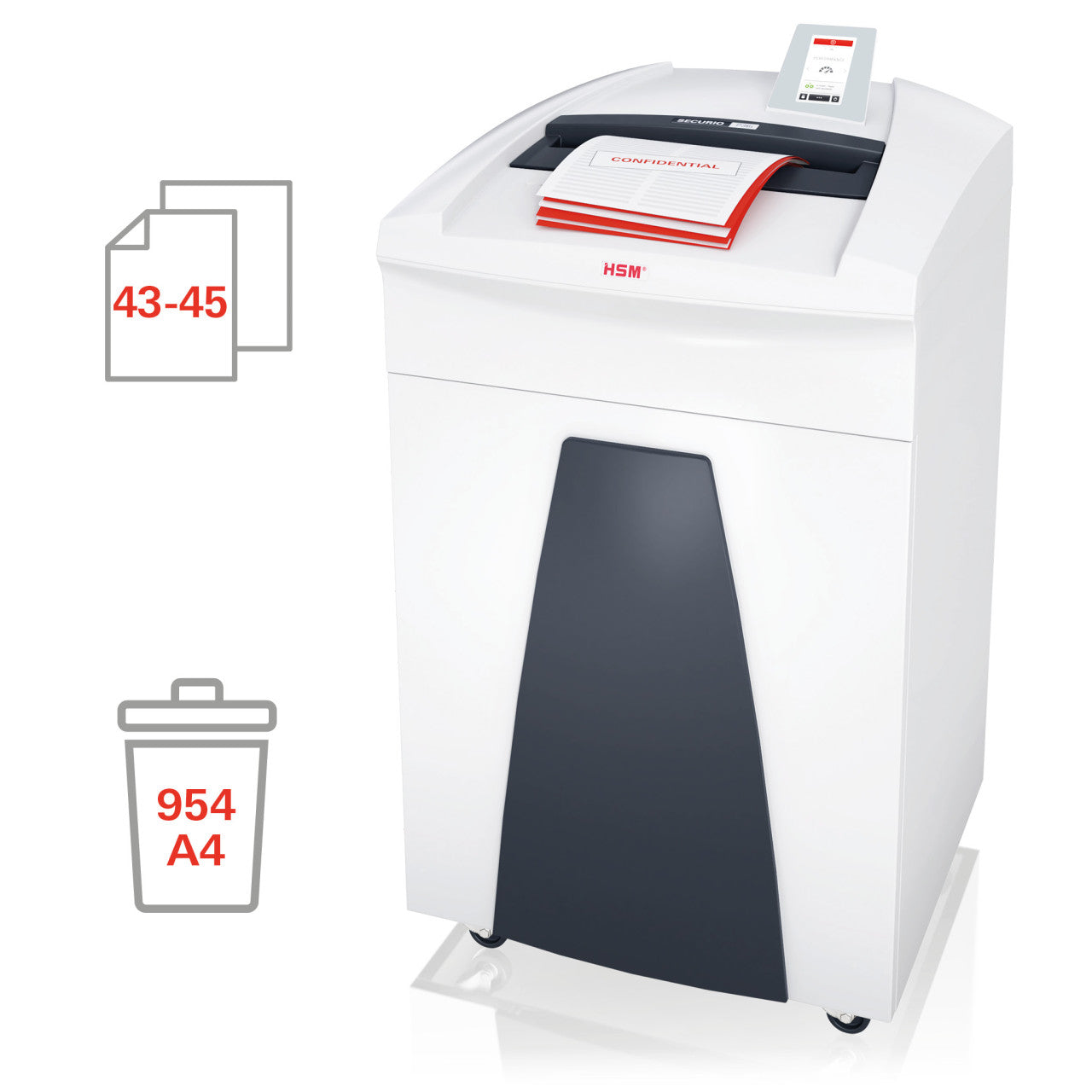
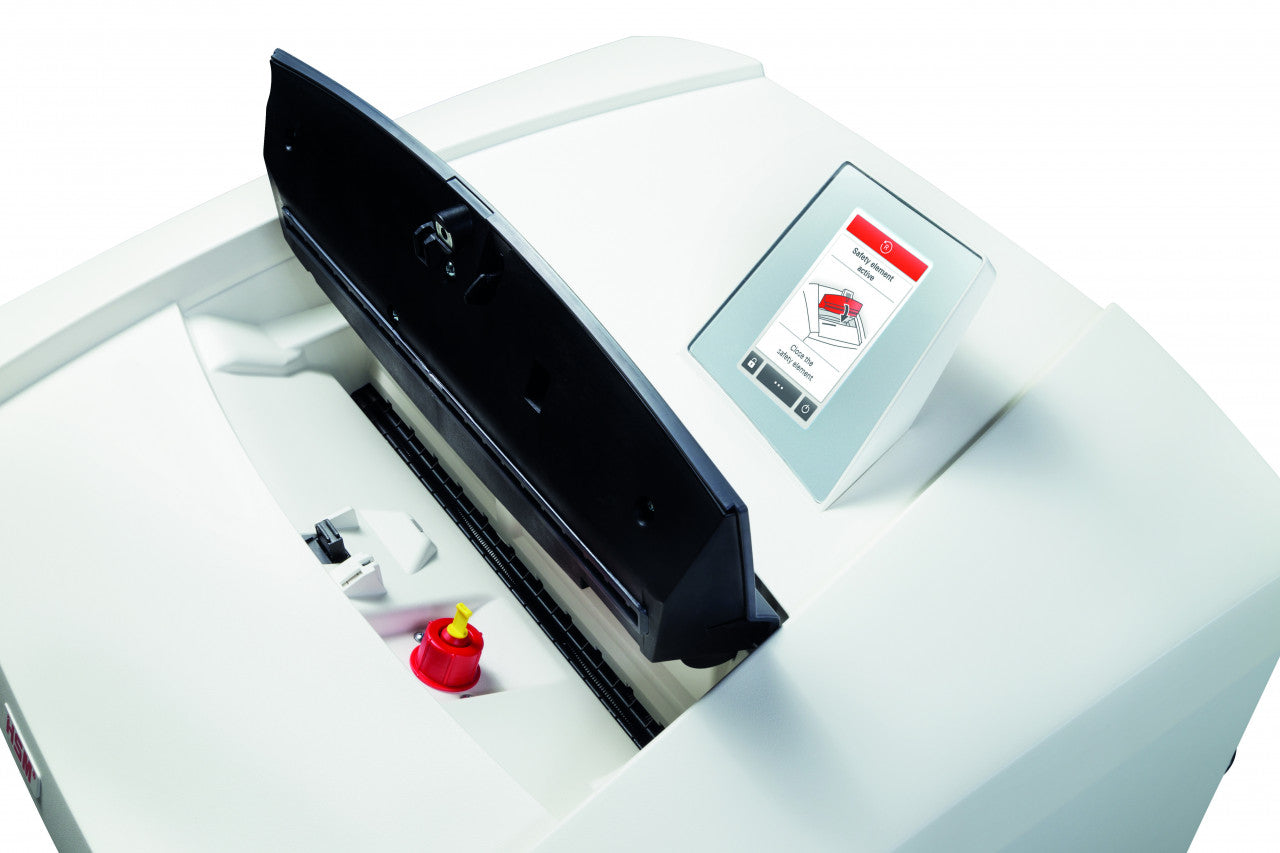
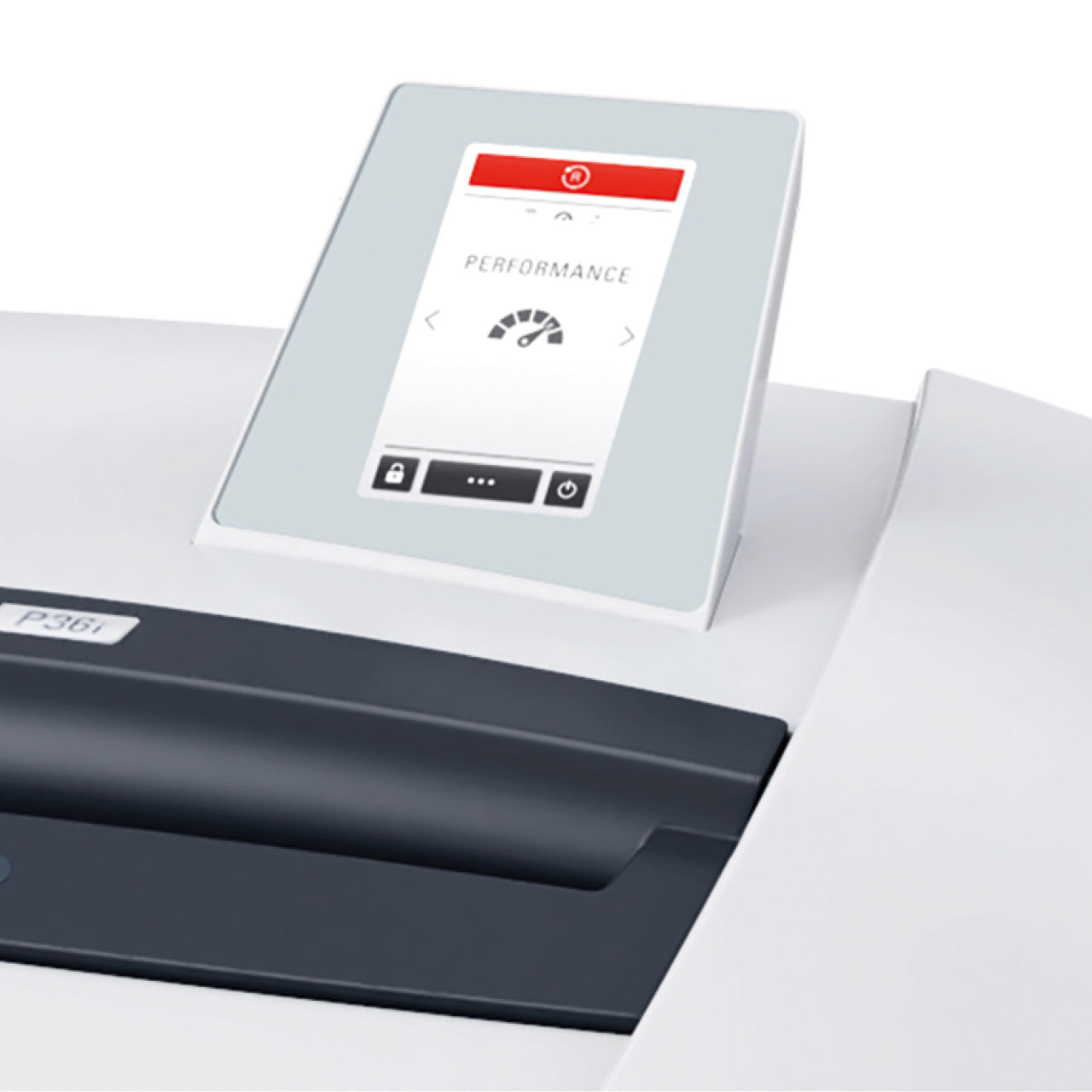
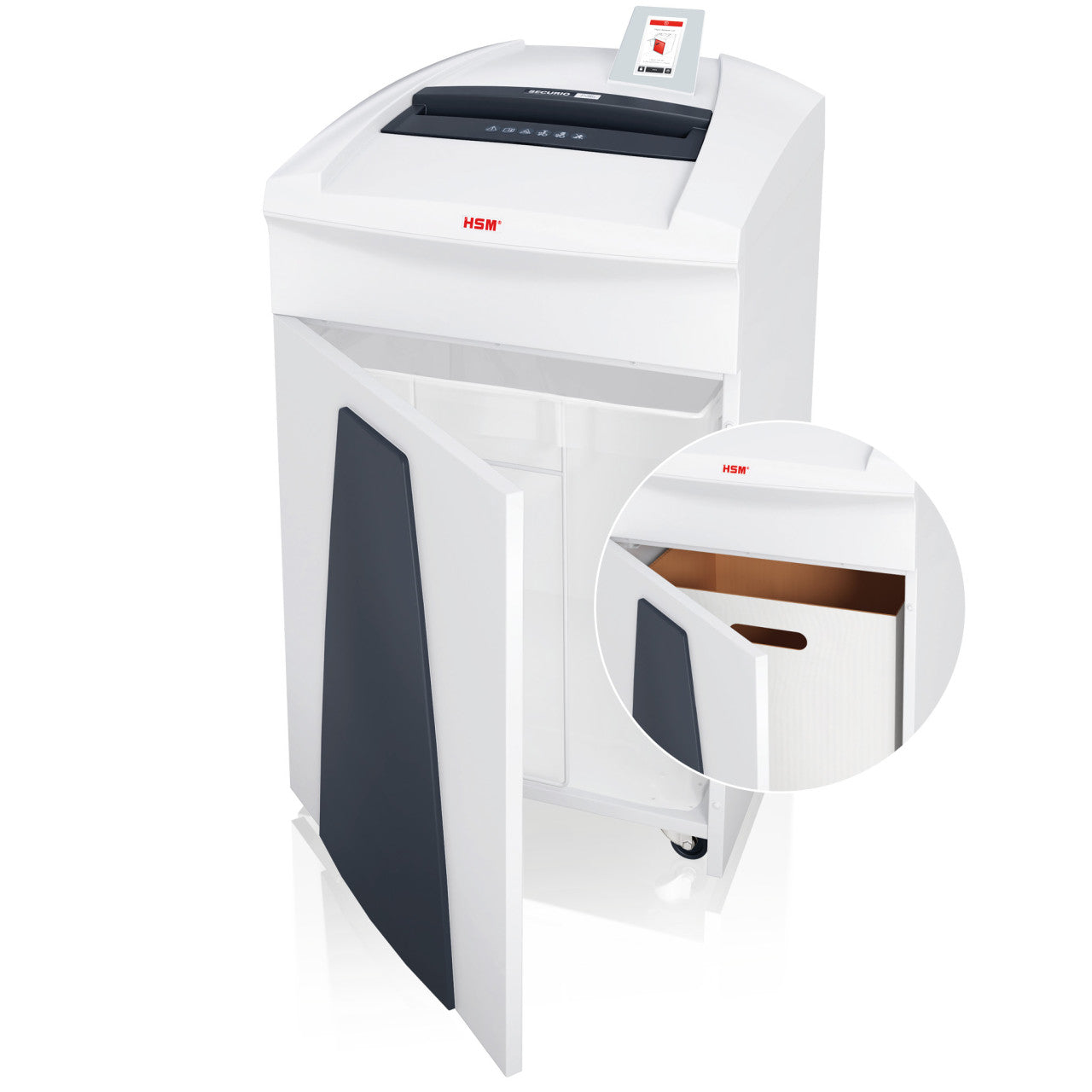
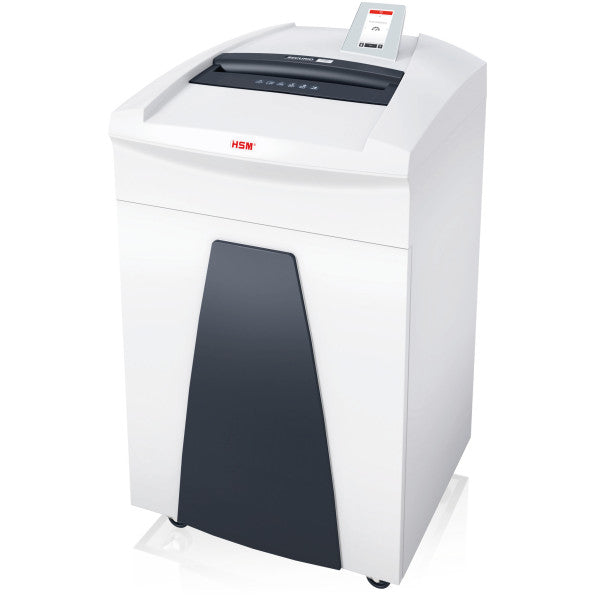
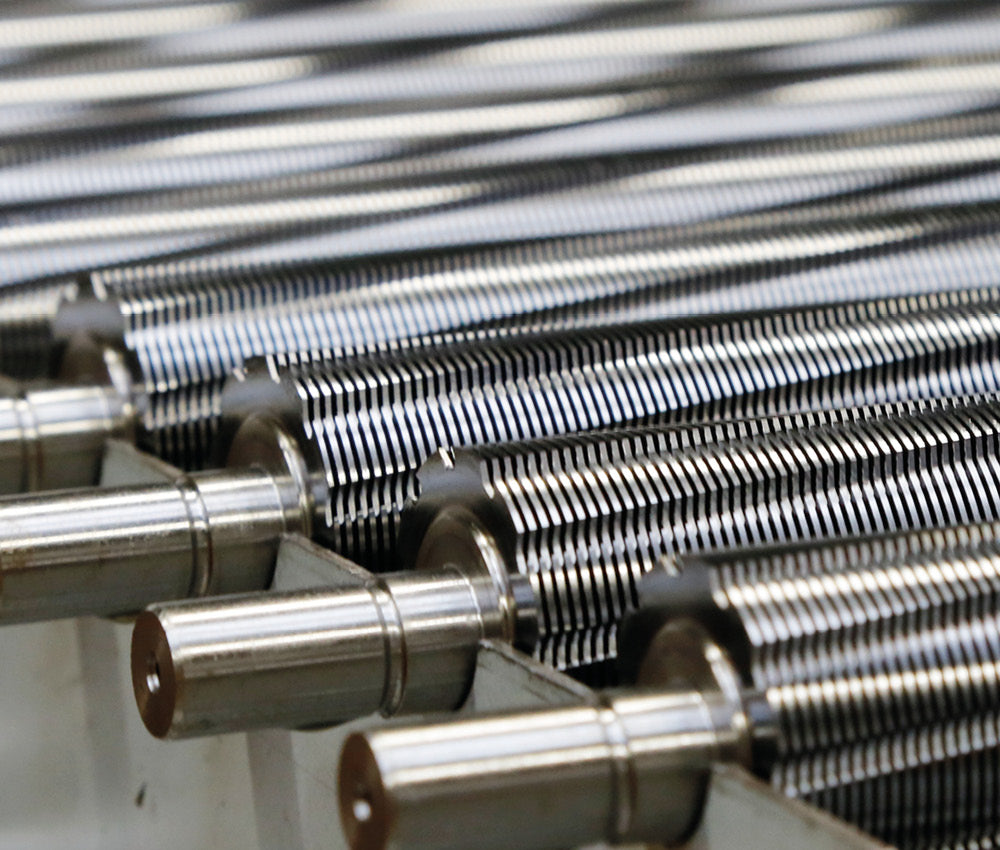
Only the cutting head. Both are P-2, both use the same 1,000 W motor, 330 mm throat, 145-litre bin and 64 kg cabinet. The 5.8 mm version takes 43-45 sheets per pass against 34-36 for the 3.9 mm, because a wider strip means less cutting work per sheet. Neither one raises the security class. Pick on throughput, not on security.
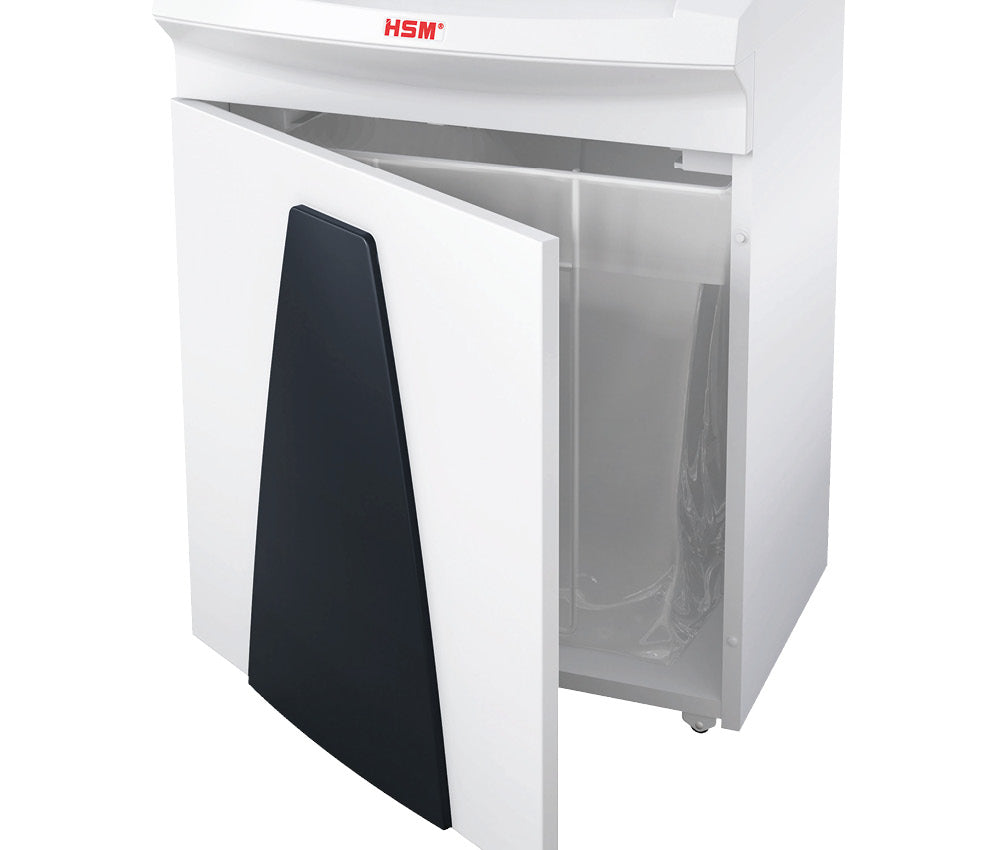
How often will the bin need emptying?
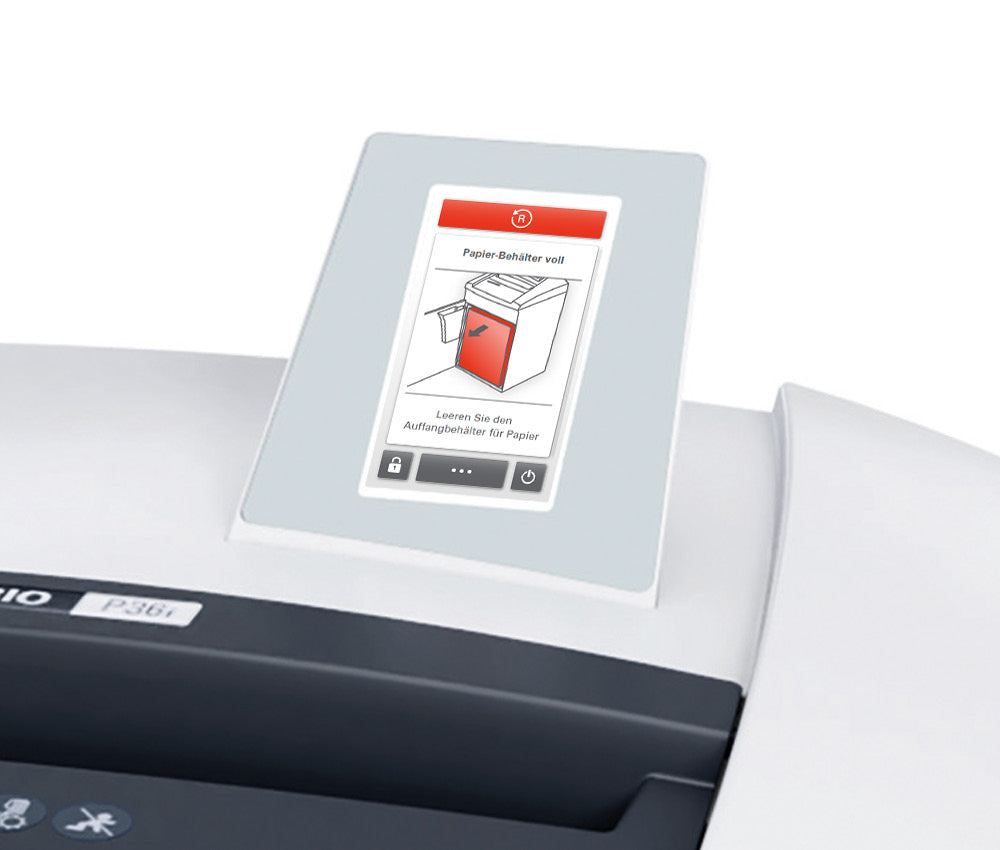
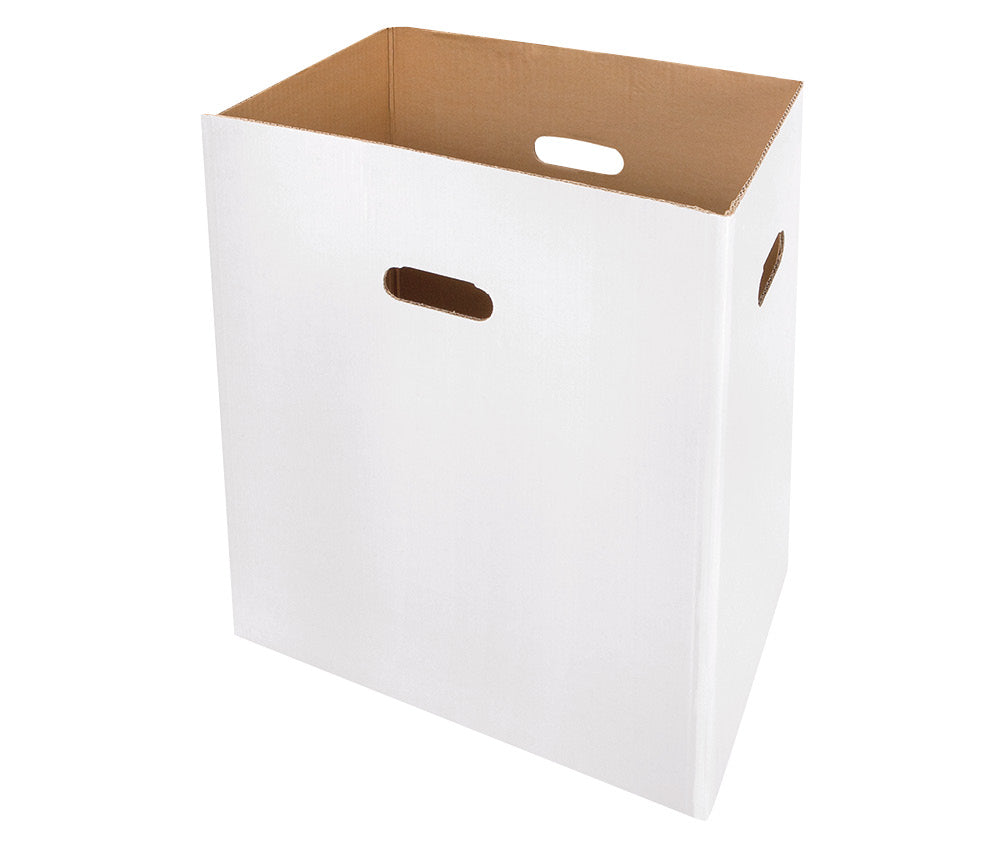
HSM rates the 145-litre bin at about 954 sheets of shredded material for this cut size. Strip cut is bulky, which is why that number is lower than the 1,773 sheets the 4.5 x 30 mm P36i manages in the identical bin. If a department feeds it two full reams a week, expect to empty it roughly weekly.
Can it shred CDs, DVDs and credit cards?
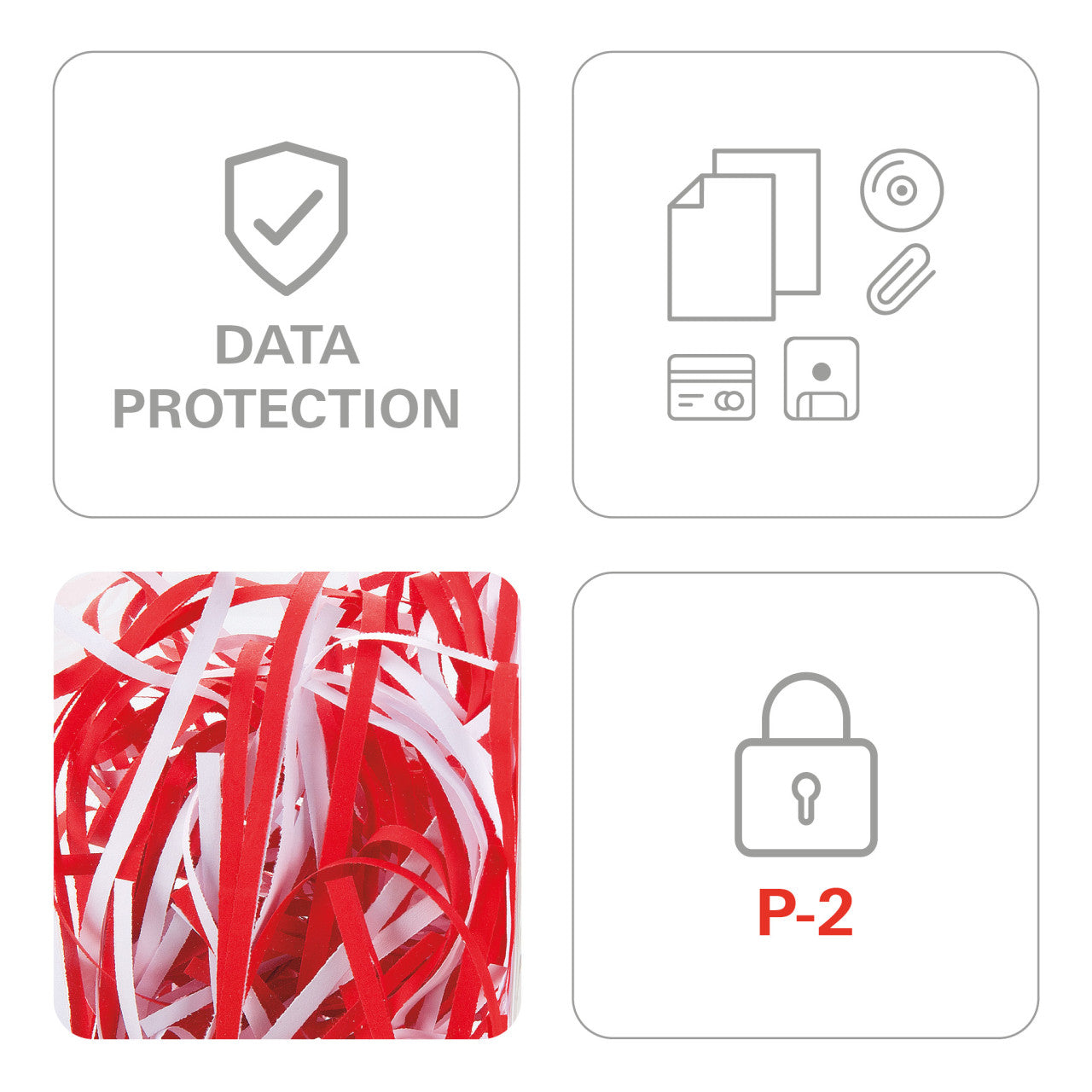
Yes. HSM lists credit cards, CDs/DVDs and floppy disks alongside paper for this article. Feed optical media one disc at a time. Bear in mind that a 5.8 mm strip through a CD is O-2 class destruction, not high security; if optical media is genuinely sensitive you want a machine with a separate media cutting unit, such as the P36i 4.5 x 30 mm with the 4 x 7 mm CD unit (1853121C).
How many people can share one?
In practice a floor of 15 to 30 people. The constraint is not the motor — HSM rates the P36i for continuous operation and publishes no cool-down duty cycle — but the queue at the throat and the bin. Above about 30 regular users, either add a second machine or move to a larger-bin model, because emptying becomes the bottleneck.
Does it need oiling?
There is no integrated automatic oiler on the strip-cut P36i models; HSM fits that to the particle-cut versions. Strip cutting generates less friction across the rollers. Manual oiling is not part of HSM's published maintenance for this article, so the practical routine is simply keeping the intake free of dust and emptying the bin before it packs solid.
Is 5.8 mm enough for GDPR or HIPAA-type paperwork?
No, not on any reading we would defend. Both frameworks require destruction appropriate to the risk, and the widely used benchmark for personal data is DIN/ISO class P-4 or finer. This machine is P-2. Use it for non-personal bulk paper and put a P-4 or P-5 machine next to it for anything identifying.