




Before you specify
Frequently Asked Questions
Is the HSM Pure 120 cross-cut secure enough for financial records?
Yes, for normal business records. It shreds to P-4, the level most organizations set for files with names, account numbers or payroll details. Particles are 4 x 25 mm, or 100 mm², against a P-4 maximum of 160 mm². For classified or trade-secret material, you would need P-5 or higher.
Do I need to remove staples before using the Pure 120?
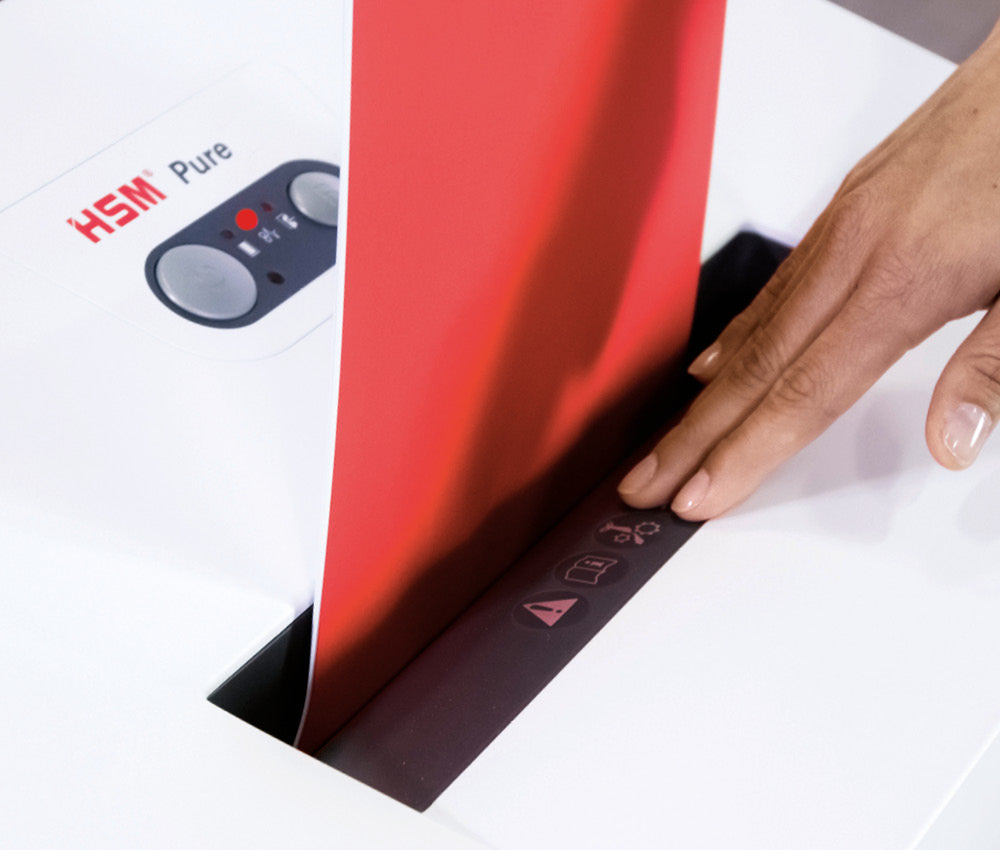
No. The Pure 120's hardened steel rollers are rated for staples and paper clips, so documents can go in as they are. Remove bulldog clips, binder rings and laminated sheets, which the machine is not designed to handle.
Can the Pure 120 cross-cut shred credit cards or CDs?
It shreds credit cards but not CDs. Its T-4 rating covers magnetic cards, and HSM lists credit cards as an accepted material. There is no optical class in its DIN rating, so discs could damage the cutters; choose a model rated for optical media if you need that.
How often does the Pure 120 cross-cut bin need emptying?
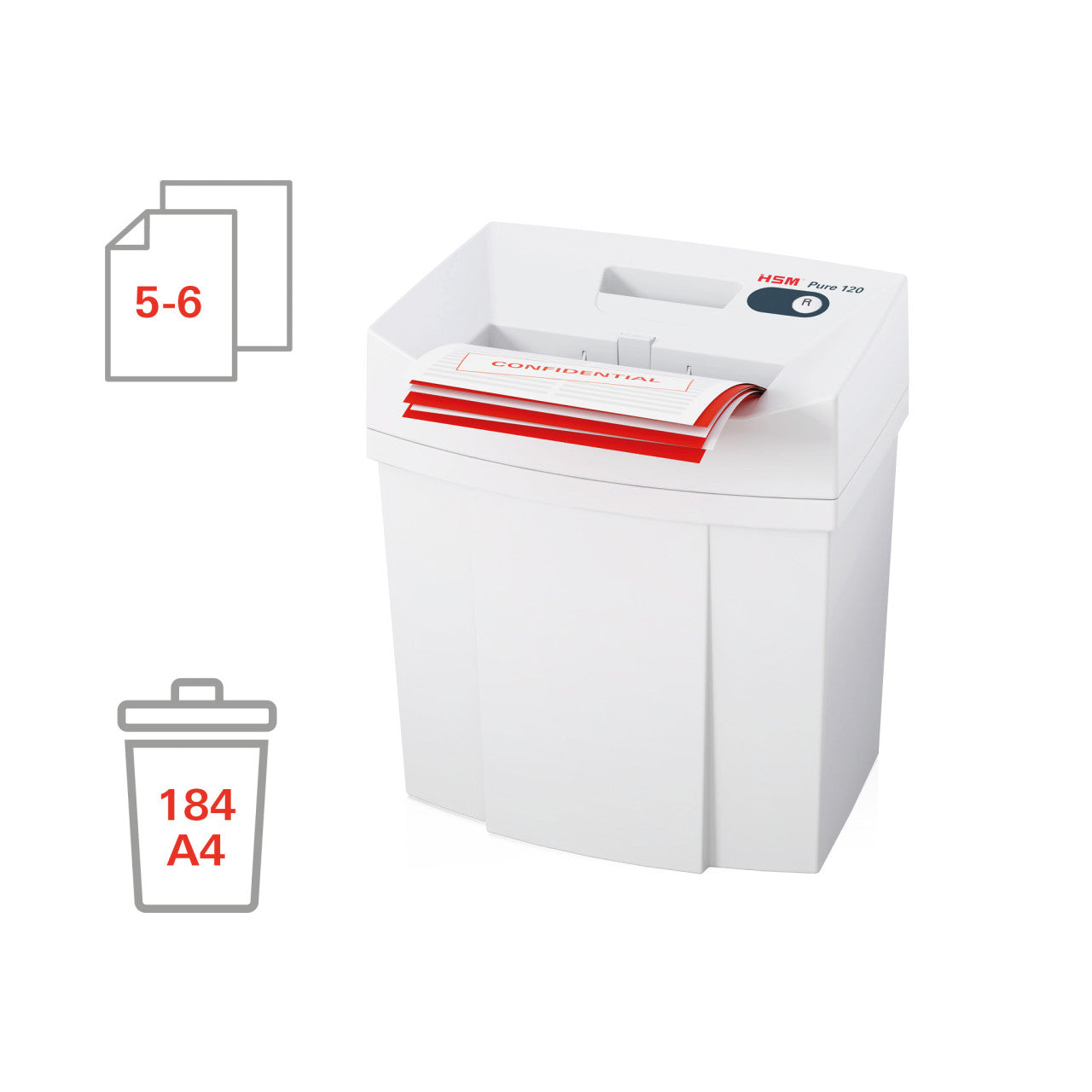
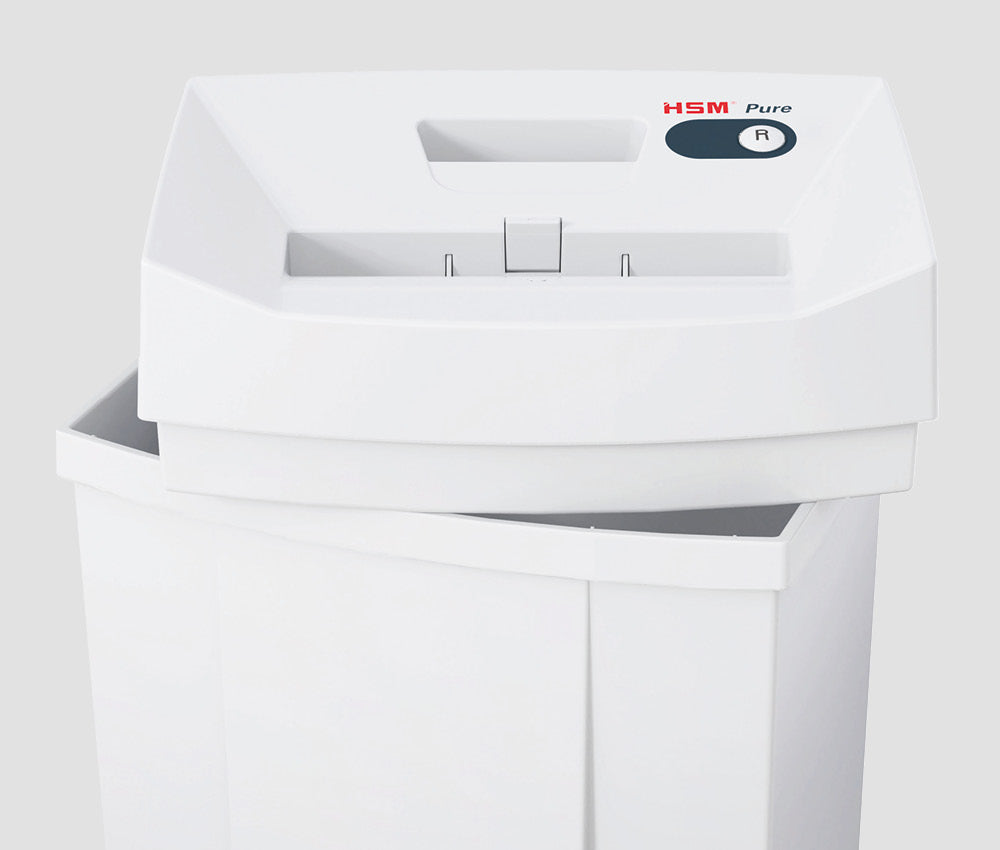
The 20 L (5.3 gal) bin holds approximately 184 shredded sheets. At a few dozen pages a day that works out to about once a week. If you shred closer to a hundred pages daily, the Pure 220 with its 25 L bin will save trips.
What is the difference between the Pure 120 cross-cut and the Pure 120 strip cut?
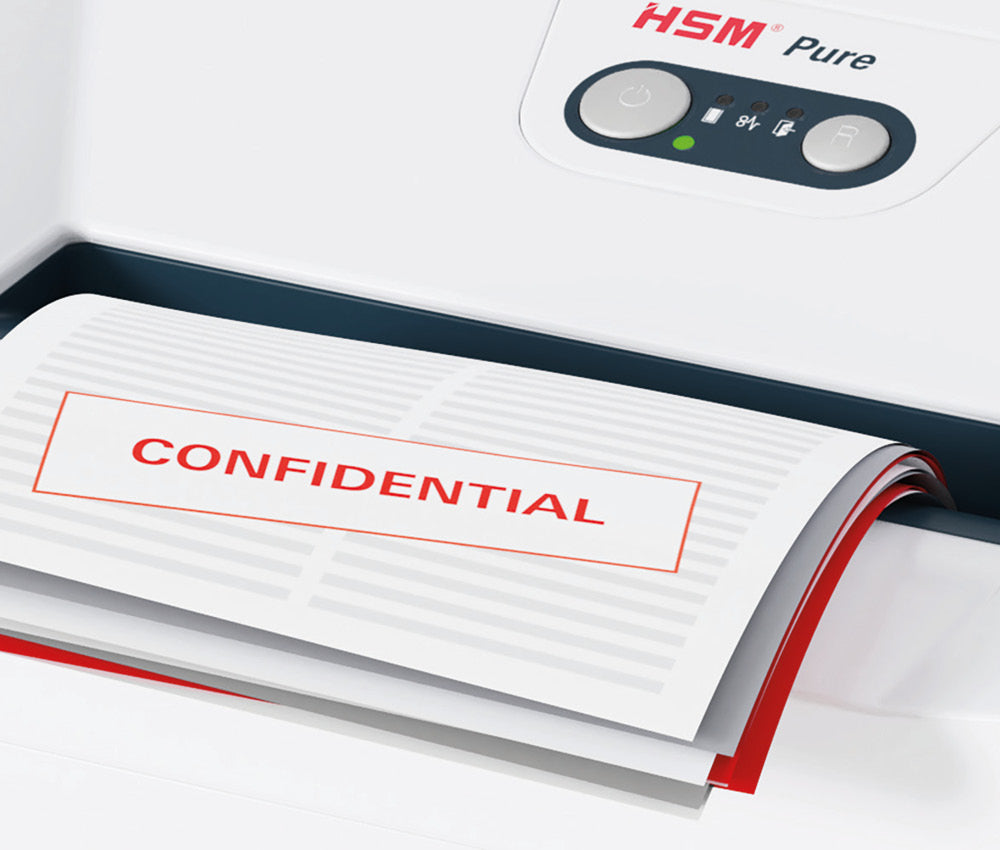
The cutting head. The cross-cut model makes 4 x 25 mm particles at P-4 and takes 5-6 sheets. The strip-cut version slices 3.9 mm strips at P-2 and takes 10-12 sheets, but strips leave lines of text readable, so it is only for non-confidential paper.
Can a small team share the HSM Pure 120?
Not comfortably. It is designed as a personal machine, takes only 5-6 sheets per pass and has no published duty cycle. One regular user is ideal. For a shared office, the Pure 420 or Pure 530 cross-cut models are built for more people.