1
/
of
11
HSM
HSM Powerline FA400.2 1/4 x 2 Document Shredder - HSM1514
HSM Powerline FA400.2 1/4 x 2 Document Shredder - HSM1514
Regular price
$14,059.61 USD
Regular price
$28,307.61 USD
Sale price
$14,059.61 USD
Product listing details
- Vendor
- HSM
- Product type
- Heavy duty document shredder
- Condition
- New
- SKU
- 1514147
- Price
- $14,059.61 USD
- Currency
- USD
- Availability
- In stock
- Shipping policy
- Click to view policy
- Refund policy
- Click to view policy
- Return policy
- Click to view policy
🚚 Free Shipping Across the USA
Quantity
Couldn't load pickup availability
Description
Description
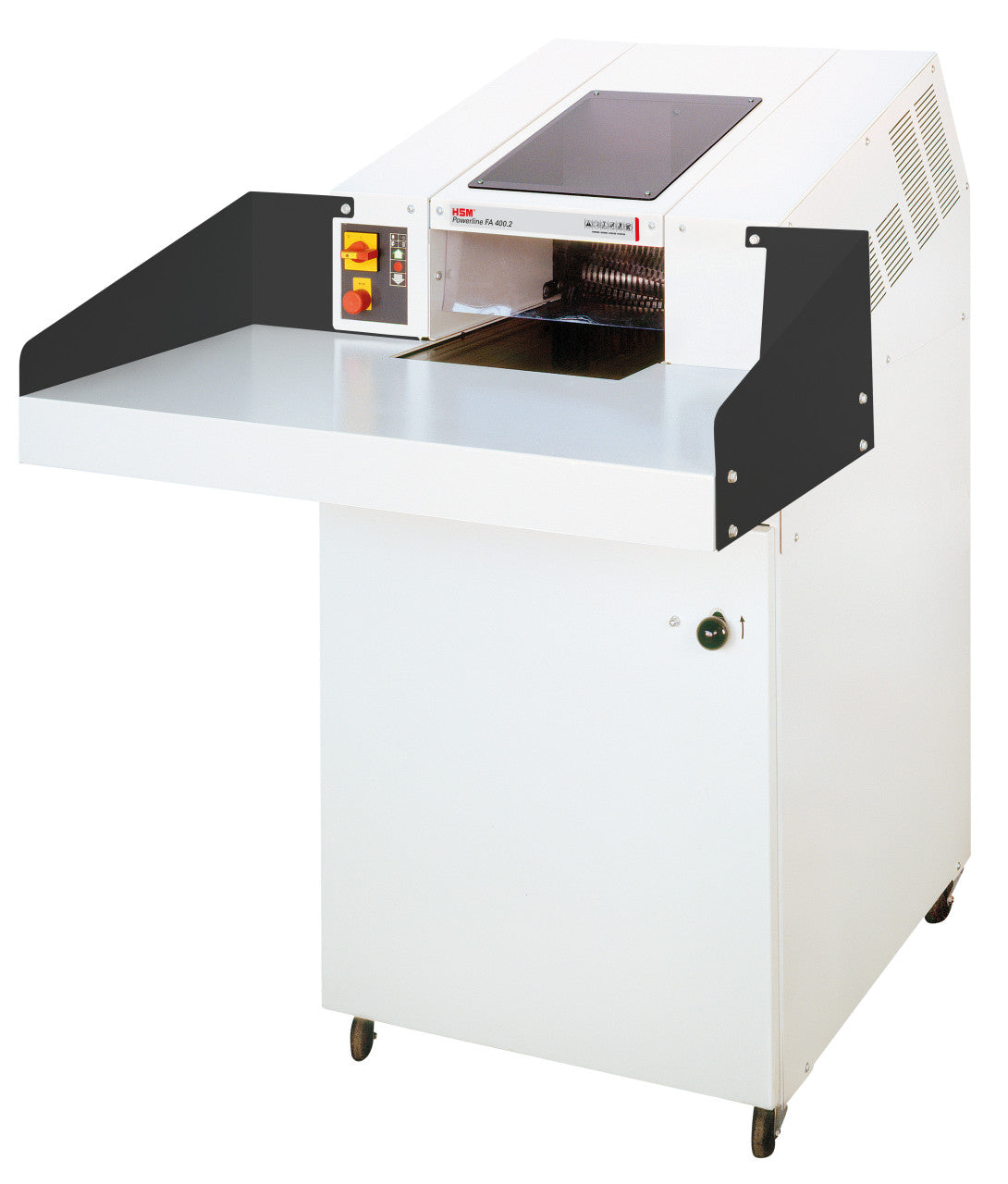
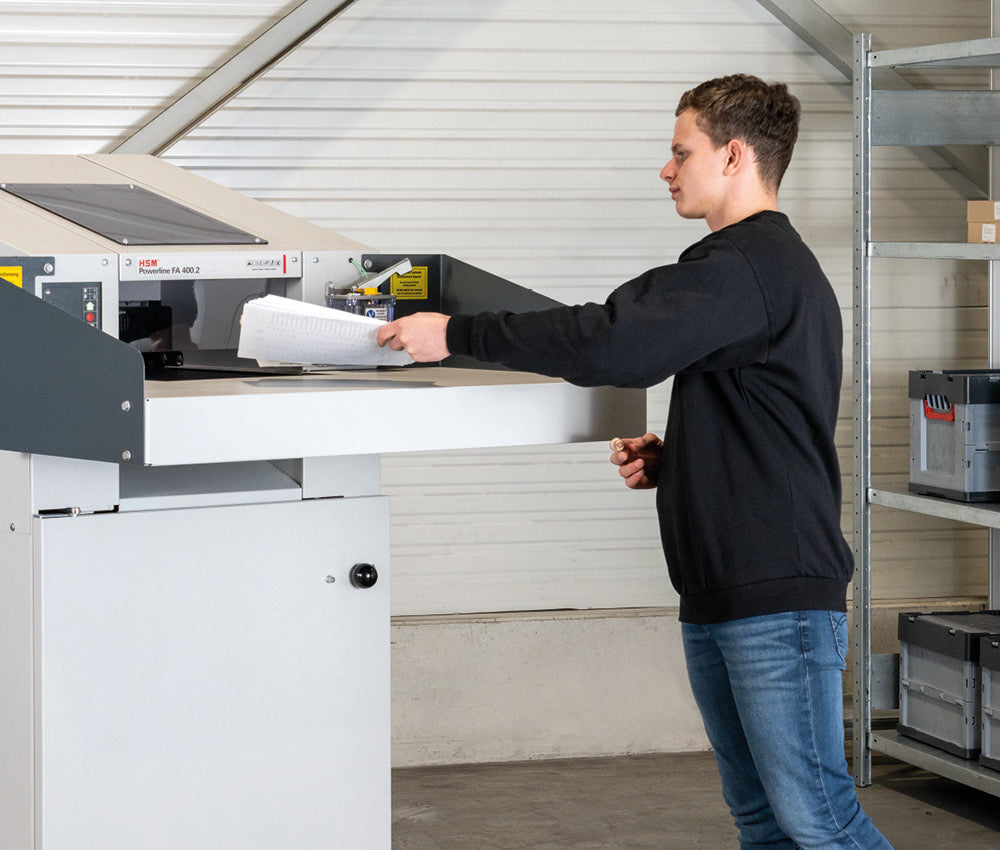
The HSM Powerline FA400.2 - 1/4 x 2 is engineered for organizations demanding superior document shredding performance, blending robust security and remarkable capacity into one powerful solution. This industrial-grade system features a particle cut mechanism, ensuring sensitive information is thoroughly destroyed. With an impressive cutting capacity of up to 96 sheets per pass, it handles everything from paper and staples to credit cards, CD/DVDs, and even computer listings. The expansive 121.5-gallon collecting container means fewer interruptions for emptying, supporting continuous workflow in busy environments. Designed for reliability, the FA400.2 operates at a low noise level of approximately 61 dB(A), making it suitable for office and industrial settings alike. Its wide 16.85-inch intake accommodates large documents, while the sturdy build and 5.36 HP motor deliver consistent performance. Whether you’re handling crumpled paper or outdated digital media, this shredder ensures your data remains confidential and your workspace efficient.
Key Features
- High Sheet Capacity - Shreds up to 96 sheets of 80g paper per pass for maximum productivity.
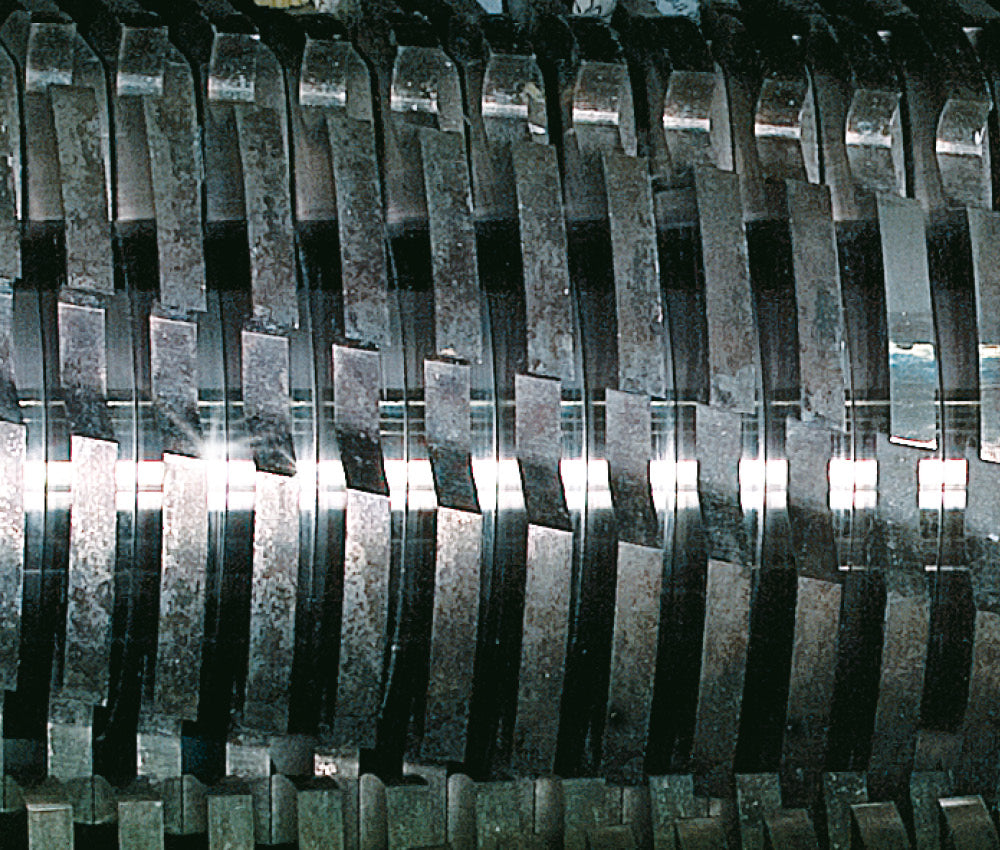
- Particle Cut Technology - Provides enhanced security by reducing documents to 1/4 x 2 inch particles.
- Versatile Media Handling - Destroys paper, staples, paper clips, credit cards, CDs/DVDs, crumpled paper, floppy disks, and computer listings.
- Large Intake Width - 16.85-inch feed opening accommodates wide-format documents and continuous forms.
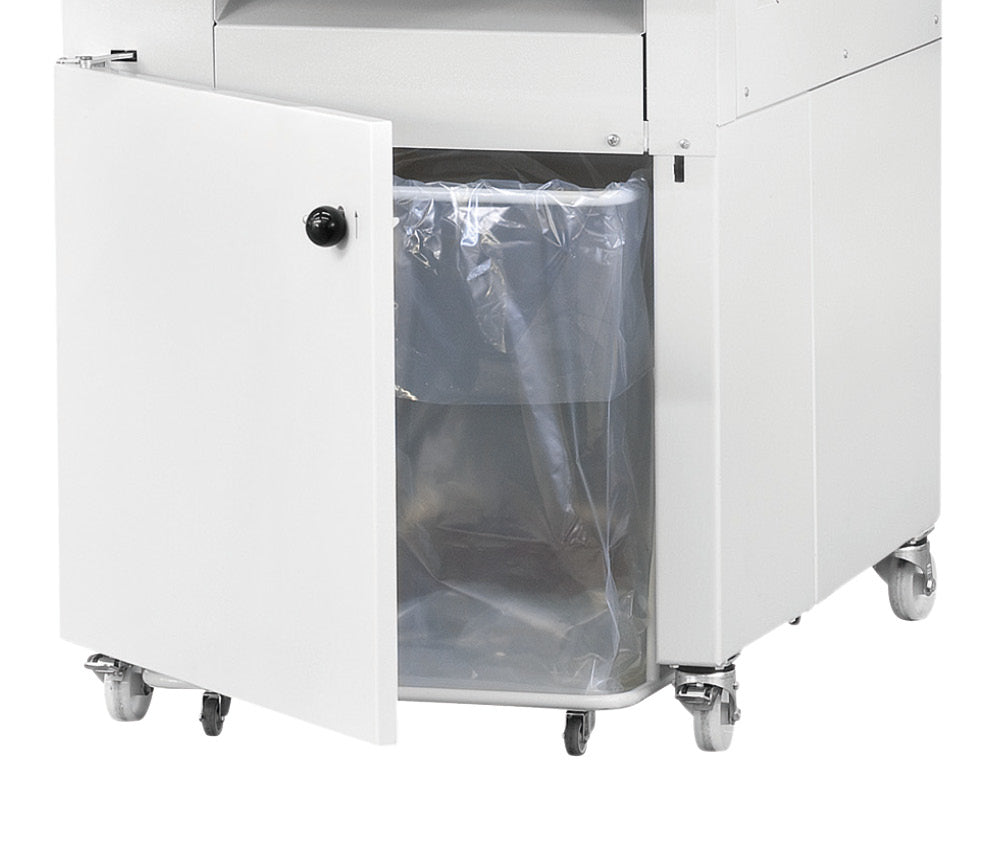
- Spacious Collection Bin - 121.5-gallon container minimizes downtime for emptying and supports high-volume operations.
- Powerful Motor - 5.36 HP engine ensures reliable, continuous shredding even with demanding workloads.
- Low Noise Operation - Operates at approximately 61 dB(A) for a quieter working environment.
- Industrial Durability - Robust construction and 411 kg weight provide stability and longevity.
- Advanced Security Levels - Meets DIN 66399 security standards E-2, O-2, P-3, and T-3 for confidential document disposal.
- Efficient Power Usage - Runs on 208 V / 60 Hz for optimized energy consumption in commercial settings.
- Wide Application Range - Suitable for offices, warehouses, and organizations with intensive shredding needs.
- 1514147
- FA400.2c
- HSM1514
Product Specification
Product Specification
Machine Type
Industrial
Shredder Series
Powerline
Cut Type
particle cut
Shreddable Materials
Paper, Staples and paper clips, Credit card, CD/DVD, Crumpled paper, Floppy disk, Computer listings
Cut Size
1/4 x 2
Bin Size / Container Volume
121.5 gal
Throat Width
16.85"
Power Consumption
5.36 HP
Voltage
208 V / 60 Hz
Weight
411 kg
Security Level
E-2|O-2|P-3|T-3
Sheet Capacity
96
Dimensions (WxDxH)
112 cm x 156.8 cm x 164.9 cm
Product Resources
Product Resources