Dahle
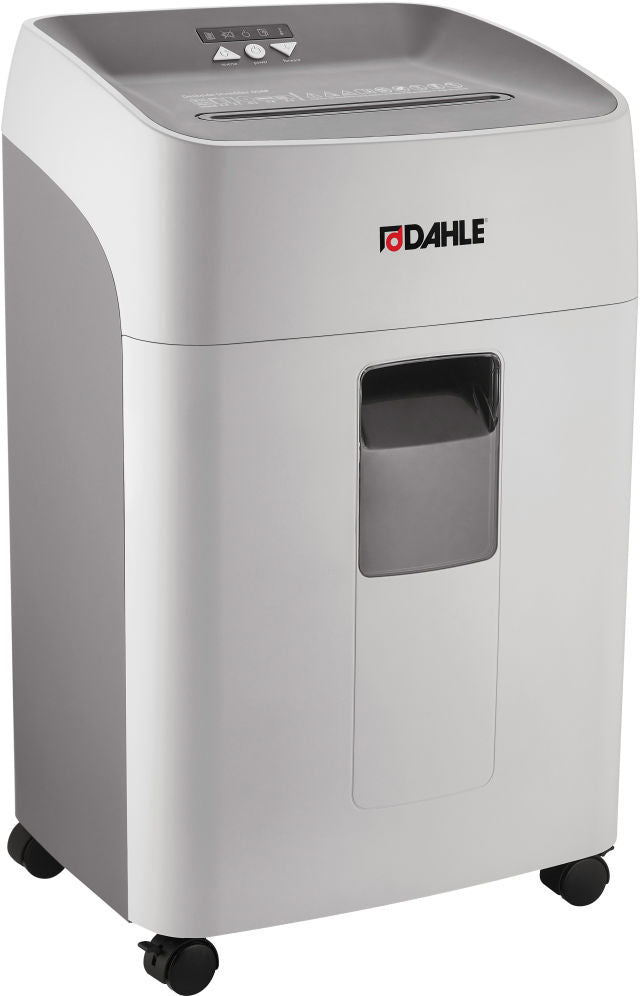
Dahle 52214 Oil-Free Paper Shredder w/Jam Protection, SmartPower, German Engineered, 20 Sheet Max, Security Level P-4, 2-4 Users
Dahle 52214 Oil-Free Paper Shredder w/Jam Protection, SmartPower, German Engineered, 20 Sheet Max, Security Level P-4, 2-4 Users
Product listing details
- Vendor
- Dahle
- Product type
- Small Office Shredder
- Condition
- New
- SKU
- 52214-17003
- GTIN
- 4009729079140
- Price
- $459.00 USD
- Currency
- USD
- Availability
- In stock
- Shipping policy
- Click to view policy
- Refund policy
- Click to view policy
- Return policy
- Click to view policy
🚚 Free Shipping Across the USA
Couldn't load pickup availability
Description
Description
The Dahle 52214 Small Office Shredder is oil-free and supports the document destruction needs of busy offices with 2-4 users. It features oil-free, hassle-free operation, SmartPower energy management, and automatic jam protection to eliminate frustration. This P-4 shredder produces a 1/8" x 1 9/16" particle size and holds up to 11 gallons of shredded waste. ItÕs German engineered and guaranteed to provide many years of trouble-free operation. OIL-FREE- Wondering when your shredder was last oiled is no longer a concern with this oil-free, hassle-free shredder. Through clever engineering, this machine maintains peak performance without the aid of oil. JAM PROTECTION- The cylinder design produces three continuous points of contact with the paper. This smooth, even pull prevents the paper from becoming wedged to either side and provides unprecedented jam protection. SMARTPOWER- This shredder automatically powers down after 30 minutes of inactivity. It will appeal to those interested in conserving energy as well as reducing electrical costs.
- Oil-Free / Hassle-Free shredding maintains performance without maintenance
- Automatic jam protection reduces jams and eliminates frustration
- SmartPower Energy Management reduces power consumption and saves on electrical costs
- Convenience features include simple controls and automatic on/off
- Thermally protected motor prevents shredder from overheating
- Easy to empty waste bin - no bags required
- Shreds CDs, credit cards, paper clips, and staples
- German engineered for quality and trouble-free operation
- Oil-Free
- German Engineered
- Jam Protection- Trident Grip
- SmartPower
- Thermally Protected Motor
- Matrix Cutting Cylinders
- Auto Stop/Start
Product Specification
Product Specification
Product Resources
Product Resources