1
/
of
1
Fellowes
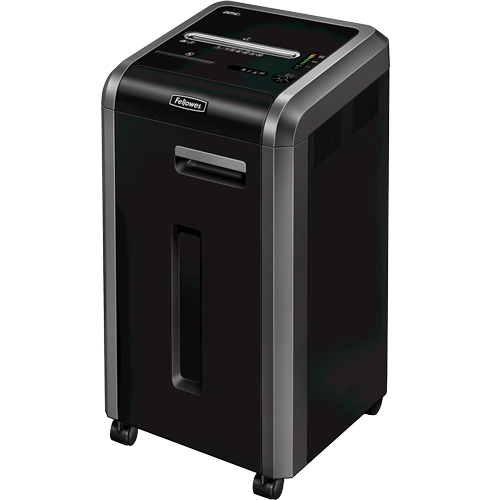
Powershred 225Ci 100% Jam Proof Cross-Cut Shredder
Powershred 225Ci 100% Jam Proof Cross-Cut Shredder
Regular price
$1,210.95 USD
Regular price
Sale price
$1,210.95 USD
Product listing details
- Vendor
- Fellowes
- Product type
- Commercial & Large Office Shredders
- Condition
- New
- SKU
- 3825001
- GTIN
- 043859573691
- Price
- $1,210.95 USD
- Currency
- USD
- Availability
- In stock
- Shipping policy
- Click to view policy
- Refund policy
- Click to view policy
- Return policy
- Click to view policy
🚚 Free Shipping Across the USA
Quantity
Couldn't load pickup availability
Description
Description
Powershred® 225Ci 100% Jam Proof Cross-Cut Shredder
Special Features
- Maximize productivity while maintaining security/Shred more at once, securely/ Enhanced shredding efficiency and security
- Keeping your workday on schedule and your sensitive information safe, the 225Ci shreds up to 22 sheets of paper per pass into 397 5/32” x 1-1/2” cross-cut particles (Security Level P-4)
- Prevent time-consuming document sorting and staple removal, the heavy-duty 225Ci can also shred your staples, paper clips, plastic credit cards, CDs/DVDs, and junk mail
- Part with frustrating paper jams, for good: The 225Ci is 100% Jam Proof, eliminating burdensome paper jams and engineered to power through tough jobs
- Protect yourself and others with SafeSense: Patented SafeSense Technology stops shredding when hands touch the paper opening, keeping your workspace safe
Product Specification
Product Specification
Machine Type
Commercial & Large Office Shredders
Cut Type
Micro-Cut
Shreddable Materials
Staples, Credit Cards, Paper Clips, CDs/DVDs, Junkmail
Cut Size
5/32" x 1-1/2"
Bin Size / Container Volume
16 gallons
Throat Width
9.5 inch
Voltage
110V - 220V
Weight
83 lb
EAN
043859573691
Security Level
P-7
Sheet Capacity
Up to 18
Dimensions (WxDxH)
30.75 x 17.75 x 17.15 inch
dB Level
SilentShredª
Product Resources
Product Resources