
1
/
of
1
KOBRA
KOBRA 260 TS S4
KOBRA 260 TS S4
Regular price
$1,254.95 USD
Regular price
Sale price
$1,254.95 USD
Product listing details
- Vendor
- KOBRA
- Product type
- Large Size Offices
- Condition
- New
- SKU
- 260 TS S4
- GTIN
- 8026064998000
- Price
- $1,254.95 USD
- Currency
- USD
- Availability
- In stock
- Shipping policy
- Click to view policy
- Refund policy
- Click to view policy
- Return policy
- Click to view policy
🚚 Free Shipping Across the USA
Quantity
Couldn't load pickup availability
Description
Description
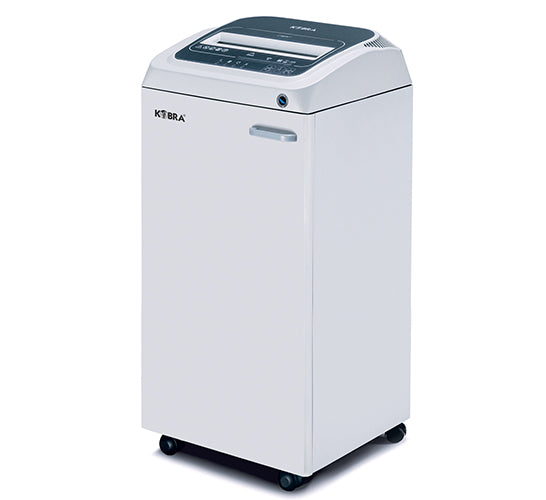
KOBRA 260 TS S4
Professional touch screen shredder for medium-large sized offices
Touch screen shredder, all controls are activated by simply touching the panel. Equipped with 24 hour continuous duty motor without overheating and duty cycles, two separate sets of cutting knives (one for paper and one for CDs/DVDs). Kobra 260 TS S4 can shred up to 28 sheets at a time. Carbon hardened steel cutting knives unaffected by staples and clips. Energy Smart System and automatic disconnection from the mains for maximum power saving. Kobra 260 TS line shredders can shred transparent material too: keep your finger for 5 seconds on the Forward control and the machine works continuously for 30 seconds.
- Two separate set of cutting knives: CD/DVD dedicated cutting unit for optical media shredding
- Super Potential Power Unit: heavy duty chain drive system with steel gears
- Continuous duty shredding: 24 hour continuous duty motor without overheating and duty cycles
- Carbon hardened steel cutting knives unaffected by staples and clips
- Energy Smart System: the machine goes into power saving stand-by mode after just 8 seconds of non-operation
- Automatic disconnection from the mains after 4 hours of non-operation, no need to switch off the shredder
- Touch Screen Panel with LED indicators: just touch the controls to activate the machine functions
- Start & Stop: automatic start and stop through electronic eyes
- Safety Stop: automatic stop at the door opening and/or full waste bag
- Automatic Reverse in case of jamming
- 22 gallon high volume cabinet mounted on casters. Easy to remove waste bag.
Product Specification
Product Specification
Machine Type
Large Size Offices
Shredder Series
Medium Office Shredder
Cut Type
Strip Cut
Shreddable Materials
Paper, Films, Credit cards, Credit cards with chip, CDs/DVDs/Blu-ray disks
Cut Size
1/8 inch
Bin Size / Container Volume
22 gallons
Throat Width
10.25 inch
Power Consumption
3/4 HP
Voltage
115 Volt / 60 Hz
Weight
70 lb
EAN
8026064998000
Security Level
P-2
Sheet Capacity
Up to 27
Dimensions (WxDxH)
16 x 14.4 x 40 inch
dB Level
55
Product Resources
Product Resources
