Before you specify
Frequently Asked Questions
What does the oiler package actually add over the standard 224154?
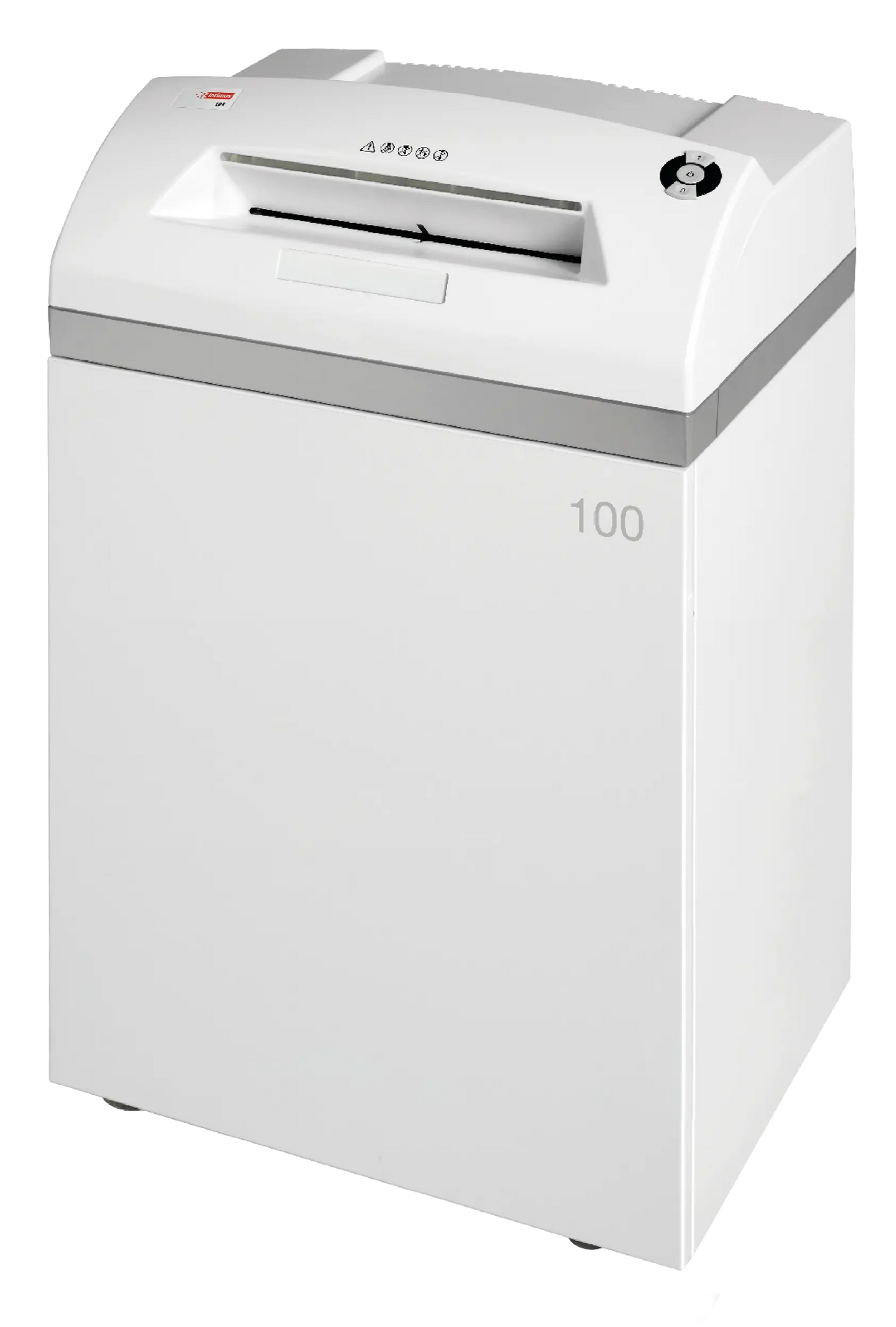
Mechanically the shredder is identical: the same 3.8 x 36 mm P-4 cutting head, the same 310 mm throat, the same 100-litre bin, the same 25-sheet rating. The 224254P1 is supplied with intimus's automatic oiler package so that cutting-cylinder lubrication happens as part of normal running rather than as a manual chore. On a machine shared by a whole department, that is usually worth the price difference purely as warranty insurance.
Can the intimus 100 CP4 shred staples and paper clips?
Yes. intimus lists paper with staples and paper clips as a rated material for this cutting head, so you do not need to strip documents before feeding them. Optical media, plastic cards, floppy disks and foil are also rated, but for intermittent use rather than continuous batches - feed a CD or a card between paper runs rather than putting fifty of them through back to back. Heavy binder clips, ring-binder mechanisms and laminated pouches are not rated and should be removed.
Will legal or tabloid paper fit through the throat?
The intake is 310 mm (12.2 in) wide. US Letter at 8.5 in fits in either orientation and A4 fits unfolded. Legal (8.5 x 14 in) and tabloid (11 x 17 in) will pass only if you feed them lengthwise, so the 8.5 in or 11 in edge goes in first. Anything wider than 12.2 in has to be folded, and folding doubles the effective sheet count against the 25-sheet rating, so fold sparingly on large batches.
How many people can share this shredder before it becomes a bottleneck?
intimus positions the 100 series at departments of roughly five or more users doing medium to high volume destruction. In practice a workgroup of five to fifteen is comfortable at 25 sheets a pass and a 100-litre bin. Past that the limit is usually bin emptying rather than cutting speed - if you find yourself changing bags more than once a day, the 120 CP4 at 120 litres or the 130 CP4 at 135 litres solves the same problem with the same cutting head.
Is the intimus 100 CP4 approved for classified material?
No. This is a P-4 machine and it is not on the NSA/CSS Evaluated Products List. P-4 covers data whose disclosure would have a serious effect on an organisation - typical commercial confidential and personal data - and it is what most GDPR, HIPAA and commercial retention policies call for. If you are destroying US classified national security information you need an NSA/CSS 02-01 listed shredder such as the intimus 120 CP7, which produces 0.8 x 4.5 mm particles and is on the Evaluated Products List.
How loud is it in an open-plan office?
intimus rates the 100 CP4 at 56 dB(A) at idle. That is roughly conversational level and quiet enough that the machine can sit in a working bay rather than a separate room. Under load, as with any cross-cut shredder, it will be noticeably louder than the idle figure - intimus does not publish a loaded figure, so we are not going to quote one. The sealed wooden cabinet does meaningful work here; it is the main reason cabinet shredders sound softer than open-frame ones.
Are waste bags included, and how often will I be changing them?
Bags are a separate consumable and are not included with the machine. Frequency depends entirely on your volume, but the useful arithmetic is that cross-cut waste at P-4 is fluffy: a 100-litre bin holds far less paper by weight than the same volume of unshredded documents. A department producing a couple of full copier boxes of paper a week should expect to change the bag once or twice a week, and daily changes are a signal you have outgrown the 100-litre chassis.
Does the cutting head need oiling, and what happens if I skip it?
Yes, and this one matters commercially. intimus North America's warranty policy states that all cross-cut shredders require lubrication of the cutting cylinders in accordance with the operator's manual, and that failure to perform this preventative maintenance may null and void the warranty. Given that the same policy grants a lifetime limited warranty against cutting-cylinder fracture on commercial models, skipping oiling forfeits the single most valuable part of the coverage.